
Post Meniscal Surgery Rehabilitation
Specialist Knee Rehabilitation in Gosport, Emsworth and Clanfield
Book your knee specialist appointment onlineMeniscal surgery is often spoken about as though it is one thing.
In reality, recovery depends very much on the operation that has been performed.
A partial meniscectomy, where unstable torn tissue is trimmed, usually allows a quicker recovery because there is no repair that needs protecting. A meniscal repair is different. In that situation, the meniscus has been stitched and needs time to heal, which means rehabilitation is usually slower, more cautious and more closely staged.
This distinction matters.
Within our Gosport and Clanfield clinics, post meniscal surgery rehabilitation forms an important part of our specialist knee service by Band 8 level physiotherapists working at advanced level across both NHS and private practice. We work with individuals recovering from both meniscal repair and meniscectomy, as well as those who have had associated procedures at the same time. Our rehabilitation is structured, stage-appropriate and designed to restore comfortable movement, strength, confidence and function without losing sight of the biology of the tissue that has been operated on.
What Surgery Changes — and What It Doesn’t
Meniscal surgery aims to address a tear within the cartilage ring that helps distribute load and absorb shock within the knee.
If unstable tissue has been trimmed, the knee may feel mechanically freer quite quickly. If the meniscus has been repaired, the goal is to preserve and heal that tissue rather than remove it, which is often better for long-term joint health but requires more protection early on.
In both cases, surgery deals with the torn tissue itself. It does not automatically remove swelling, restore quadriceps strength or normalise gait.
The knee is often sore, swollen and inhibited after surgery. Range of movement may be reduced. Walking may feel awkward or guarded. Stairs often feel uncomfortable long before they feel strong again.
The procedure may have addressed the tear. The knee still needs retraining.
Why the Type of Meniscal Surgery Matters
One of the most important parts of rehabilitation after meniscal surgery is understanding whether the knee has had tissue removed or tissue repaired.
After a partial meniscectomy, the knee usually progresses more quickly because there is no healing repair to protect. Early movement often returns relatively well, and the focus is usually on settling swelling, regaining confidence and restoring strength and function.
After a meniscal repair, the timetable is very different. The priority is not simply to regain movement as quickly as possible. It is to protect the repair while gradually restoring movement, loading and function in a way that gives the tissue the best chance to heal.
That is why two patients who both say they have had “meniscus surgery” may have completely different rehabilitation plans.
The Early Recovery Period
In the first phase after meniscal surgery, the emphasis is on controlling swelling, restoring comfortable movement and re-establishing a more normal walking pattern.
The exact detail depends on the operation.
After partial meniscectomy, progression is often faster. After meniscal repair, there may be restrictions on bending, twisting, squatting depth or weight-bearing in the early stages, depending on the location and nature of the repair and the consultant’s protocol.
This stage is not about pushing hard. It is about settling the knee and building the right foundations for what follows.
Many patients are surprised by how heavy or inhibited the knee can feel even after relatively small arthroscopic surgery. That is particularly true where the knee was already swollen, painful or mechanically irritable before the operation.
Why Gait Recovery Matters
Walking is often treated as something that simply comes back with time.
In practice, gait quality matters enormously after meniscal surgery.
A swollen, painful or slightly flexed knee tends to walk with a compensatory pattern. The patient offloads the leg, shortens stance time and avoids full confidence through the operated side. If that pattern persists, weakness tends to persist with it.
This is one reason why walking should not be judged only by whether the patient can get from place to place. The quality of gait matters. A knee that is technically mobile but still walking poorly often remains functionally under-recovered.
Good rehabilitation helps the patient regain not just mobility, but a more symmetrical and efficient pattern of movement.
Rebuilding Strength After Meniscal Surgery
Strength recovery is one of the most underestimated parts of meniscal rehabilitation.
Because the surgery is often arthroscopic, some patients expect the knee to bounce back quickly once the wounds have healed. But swelling, pain and altered loading can shut down the quadriceps more than people realise. Hip and calf strength may also decline when walking is reduced or altered.
This is why rehabilitation needs to progress beyond basic movement exercises.
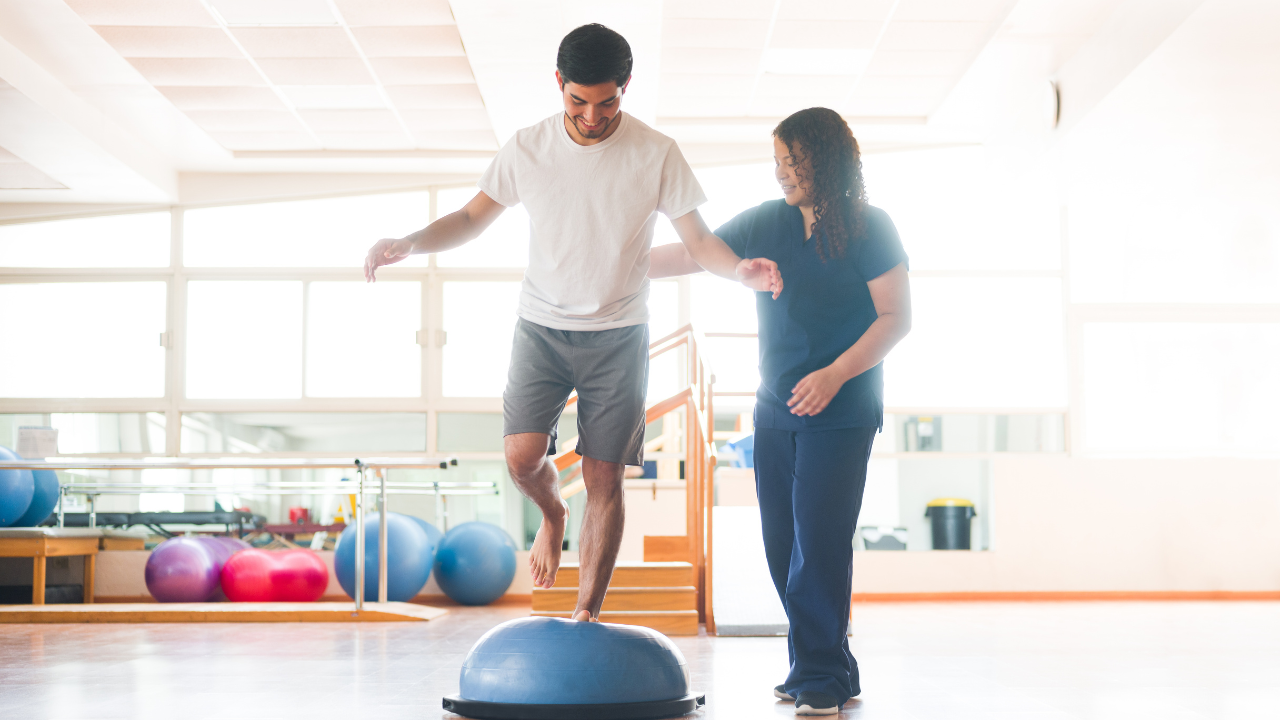
As the knee settles, strength work becomes more meaningful. Sit-to-stand control, step work, single-leg loading, squat tolerance and functional strength all become important. In more active individuals, later stages may also need to include running, landing and return-to-sport progressions.
The aim is not simply to get the knee moving.
The aim is to get the knee capable again.
Meniscal Repair and the Need for Protection
Meniscal repair usually requires more patience than patients expect.
That is not because recovery is going badly. It is because the success of the repair depends partly on respecting the healing process. Deep flexion, twisting and higher compressive loads can place stress through the repair before it is ready.
This is why repair protocols are often more protective in the early stages. The challenge is to restore movement and strength without compromising healing.
From a rehabilitation perspective, this balance is one of the most important parts of post-operative management. Progress too slowly and the knee becomes weak, stiff and underloaded. Progress too quickly and the repair may be put under unnecessary stress.
Specialist rehabilitation is valuable precisely because it helps navigate that middle ground.
When Recovery Feels Slower Than Expected
Not every knee progresses smoothly after meniscal surgery.
Some settle quickly. Others remain reactive, stiff or weak for longer than expected. A slower recovery does not automatically mean the operation has failed, but it does mean the knee needs proper assessment.
Sometimes the main issue is persistent swelling. Sometimes the quadriceps remain inhibited. Sometimes patients become cautious about bending, twisting or fully loading the knee, especially after repair. In others, the knee feels mechanically better than before surgery but still lacks strength and confidence on stairs, uneven ground or single-leg tasks.
Good rehabilitation is not about forcing progress. It is about identifying what is actually holding the knee back.
Meniscal Surgery and Return to Running or Sport
Return to sport after meniscal surgery depends very much on the procedure performed, the demands of the sport and the quality of the knee’s recovery.
After partial meniscectomy, the return is often quicker because there is no repaired tissue to protect. But “quicker” does not mean instant. The knee still needs to tolerate impact, repeated flexion, deceleration and twisting forces before sport is realistic.
After meniscal repair, return to running and sport is usually slower and more carefully staged. The knee may feel good before the tissue is genuinely ready for those demands.
This is one reason why return to sport should not be based simply on how long it has been since surgery. Function, strength, movement quality and tissue healing all matter.
When Symptoms Need Further Investigation
Some soreness, swelling and stiffness are expected after meniscal surgery.
The key question is whether the knee is gradually settling, even if recovery feels slower than hoped, or whether symptoms are becoming more concerning.
Increasing redness, wound problems, marked calf swelling, fever, chest symptoms, worsening pain or a clear deterioration in function need medical review. A knee that remains unexpectedly blocked, increasingly irritable or significantly more swollen than expected may also need further reassessment.
Part of specialist rehabilitation is recognising the difference between a knee that is simply slower to recover and a knee that needs something more.
Long-Term Function and Joint Health
The meniscus plays an important role in load distribution within the knee.
That is one reason why preserving it where possible is generally preferable to removing torn tissue, particularly in younger or more active patients. But whether the surgery has involved repair or meniscectomy, long-term knee health still depends on how well movement, strength and loading capacity are restored afterwards.
A knee that recovers good strength, control and confidence is far more likely to feel durable in the long term than one that simply becomes less painful but remains weak or poorly loaded.
The operation matters.
Rehabilitation determines how well the knee makes use of it.
Related Knee Conditions
Some patients come to surgery after the twisting injuries and joint-line symptoms described on our [meniscal tears and knee cartilage injury →] page. Others have associated [ACL injury →] or undergo meniscal surgery alongside [post ACL reconstruction rehabilitation →], particularly when both structures were injured in the same event. During recovery, some patients also develop more anterior knee symptoms consistent with [patellofemoral pain →], especially where quadriceps weakness and altered loading remain prominent.
Specialist Post-Operative Meniscal Rehabilitation
Post-operative meniscal rehabilitation forms part of our specialist knee service. Assessment looks not only at the operated knee itself, but at gait quality, strength recovery, pelvic control, balance, stair function, soft tissue irritation and the overall confidence with which the individual is returning to daily life and sport after surgery.
Our aim is to help patients recover not only a well-healed knee, but a knee that functions as well as possible in the real world.
You can explore our full knee assessment and rehabilitation pathway here→
Frequently Asked Questions About Meniscal Surgery Rehabilitation
How long does recovery take after meniscal surgery?
Why is meniscal repair slower than meniscectomy?
Is swelling normal after meniscal surgery?
Can I walk after meniscal surgery?
Why does my knee still feel weak after what seemed like a small operation?
When can I squat again?
When can I return to running?
When can I return to sport?
Why does the knee still feel stiff even though the tear has been treated?
Can physiotherapy still help if I am months after surgery?
Book a Specialist Knee Assessment
If you are recovering from meniscal surgery and want structured, specialist rehabilitation focused on movement, strength and confident return to activity, appointments are available within our specialist knee service.
Assessment is detailed, individualised and focused on helping the knee function as well as possible in the real world.
Appointments are available within our specialist knee clinics in Gosport, Emsworth and Clanfield. Book online or contact us→
Book your specialist knee appointment online