
Post Gluteal Cuff Reconstruction Rehabilitation
Specialist Gluteal Tendon Repair Rehabilitation in Gosport
Book a hip specialist appointmentGluteal cuff reconstruction is performed for significant tears of the gluteus medius and/or minimus tendons — often in individuals who have experienced persistent lateral hip pain, weakness and progressive loss of function.
These procedures are less common than hip arthroscopy and require a highly specific rehabilitation pathway.
Within our Gosport clinic, post gluteal tendon repair and reconstruction forms a defined specialist area of practice. We work closely with orthopaedic consultants in Portsmouth, Southampton and London, and provide rehabilitation for patients under their care. Advice is also provided to physiotherapists at Fortius Clinic in London regarding progression and management of these complex cases.
This is not standard lateral hip rehabilitation. It is structured tendon repair recovery delivered within a surgical framework.
Understanding the Surgery — and What It Means for Recovery
The gluteal tendons anchor the gluteus medius and minimus muscles to the outer part of the hip. These muscles are not optional extras; they are primary stabilisers of the pelvis. Every time you walk, climb stairs or stand on one leg, they prevent the pelvis from dropping and control the load passing through the joint.
When these tendons tear — particularly when the tear is large or long-standing — the muscle often weakens and the quality of its contraction changes. Some tears retract, meaning the tendon pulls away from its attachment. Others lose structural integrity gradually over time. By the point surgery is recommended, most patients have already developed compensatory movement patterns and a degree of chronic inhibition.
Surgical repair or reconstruction reattaches the tendon securely to bone and restores the anatomical anchor point. But surgery does not automatically restore strength, endurance or movement confidence.
Following repair, the tendon must biologically integrate back into the bone — a process that occurs gradually over months, not weeks. The muscle that attaches to it has often been underperforming for a considerable period before surgery. Protective walking patterns are usually well established, sometimes subtle, sometimes pronounced. Many patients have unconsciously avoided fully loading the operated side for a long time, and single-leg confidence is understandably reduced.
Rehabilitation is not simply about strengthening the outer hip. It is about reversing months or years of inhibition, restoring pelvic control under load and progressively reintroducing stress to a tendon that is healing and adapting at the same time.
That process requires precision, timing and experience.
The Early Recovery Period — Protecting the Repair
In the early weeks following surgery, protection of the repair is critical.
Weight-bearing restrictions and movement precautions vary depending on surgical technique and fixation method. Excessive compression or tensile load through the repaired tendon must be avoided while tendon-to-bone healing establishes itself.
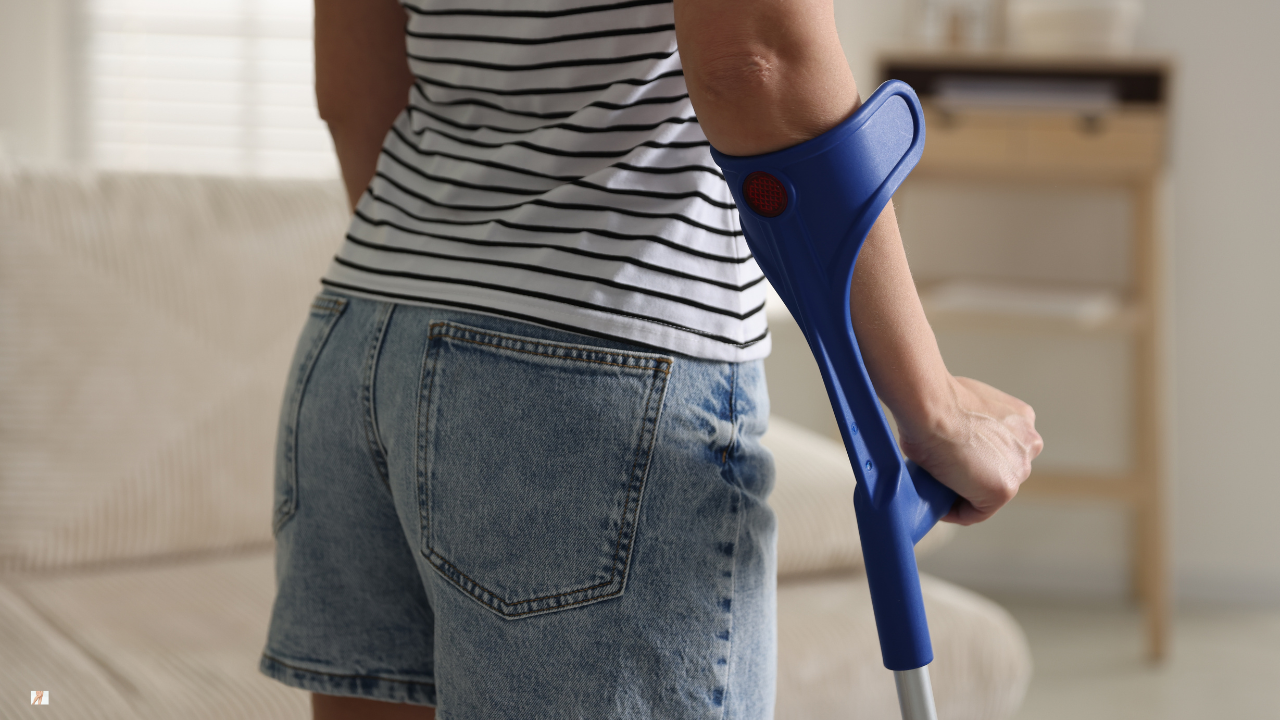
At the same time, complete immobilisation is neither helpful nor desirable. Gentle mobility with elbow crutches is maintained to prevent secondary stiffness. Gait is retrained early to avoid entrenched compensatory patterns. Muscle activation is reintroduced carefully, with close attention to quality rather than intensity.
This stage often feels vulnerable for patients. The memory of pre-operative pain remains fresh, and trust in the hip is limited. Clear explanation of what is normal, what requires adjustment and what constitutes concern is central to maintaining confidence.
For patients unable to travel in the early weeks, home visits can be arranged to ensure continuity of care before transitioning to clinic-based progression.
Restoring Pelvic Stability and Control
As healing progresses and surgical protection reduces, the focus shifts toward restoring pelvic stability under increasing load.
The gluteal tendons are fundamental to controlling single-leg stance. When they are weak or inhibited, the pelvis may subtly drop with each step, increasing strain not only through the lateral hip but also into the lower back and opposite side.
Rehabilitation therefore addresses the entire lumbopelvic system. Deep stabilising layers must re-engage effectively. Larger muscles must regain strength and endurance. Proprioception — the body’s awareness of pelvic alignment and joint position — must be restored so that control becomes automatic rather than effortful.
This progression is rarely linear. If loading is increased too quickly, reactive irritability can develop. If progression is overly cautious, persistent weakness and guarded movement can remain.
Finding the correct balance comes from experience in managing these repairs regularly.
Correcting Long-Standing Compensation
Many individuals undergoing gluteal reconstruction have adapted to pain for a prolonged period prior to surgery.
Subtle trunk lean during walking, shortened stride length and reduced time spent on the affected leg are common. Over time, these patterns become habitual.
Surgery corrects the structural deficit. Rehabilitation must address the learned compensation.
As strength improves and guarding reduces, these patterns are gradually retrained. Walking becomes smoother. Endurance increases. Confidence in standing and weight-bearing returns.
Patients frequently describe a gradual sense of stability returning — not suddenly, but progressively.
When Recovery Feels Slower Than Expected
Gluteal tendon repairs demand patience.
Tendon-to-bone healing is biologically slower than muscle strengthening alone. Even when pain has reduced, endurance and pelvic control may still be rebuilding.
It is common for patients to feel capable in controlled exercises before they feel confident walking longer distances or standing for extended periods. That sequence is normal and reflects the layered nature of recovery.
Progression is guided by movement quality, endurance and load tolerance rather than fixed timelines. If recovery appears to plateau, reassessment focuses first on irritability, activation patterns and loading strategy before considering imaging or surgical review.
Collaboration and Specialist Referral Pathways
Rehabilitation following gluteal cuff reconstruction requires understanding of surgical technique, anchor fixation methods and biological healing timelines.
We work closely with orthopaedic consultants across Portsmouth, Southampton and London to provide specialist rehabilitation for their patients. This includes complex, large and revision repairs. Advice is also provided to physiotherapists at Fortius Clinic in London regarding progression strategies for these procedures.
Gluteal reconstruction rehabilitation forms a significant proportion of the complex lateral hip presentations managed within our Gosport clinic. That depth of experience allows nuanced progression based on clinical behaviour and surgical context rather than generic timelines.
Frequently Asked Questions About Gluteal Cuff Reconstruction Rehabilitation
How long does it take for the tendon to heal to the bone?
Is it normal to still feel weak months after surgery?
Why does walking still feel unstable?
Can the repair fail?
Will I regain normal function?
When can I drive after gluteal tendon repair or reconstruction?
Book a Specialist Gluteal Reconstruction Assessment in Gosport
If you are recovering from gluteal tendon repair or reconstruction and want structured, specialist rehabilitation aligned with your surgical procedure, appointments are available at our Gosport clinic.
Assessment is detailed, informed by surgical context and focused on restoring pelvic stability, strength and confident movement.
Book Your Specialist Hip Assessment