
0330 1339090

Book an appointment

Acetabular Dysplasia

Specialist Assessment and Rehabilitation in Gosport

Book a hip specialist appointment

Acetabular dysplasia refers to a structural variation in which the socket of the hip provides reduced coverage of the ball of the femur. In simple terms, the socket is slightly shallower than average.

This difference in shape alters how load is distributed across the joint.

Unlike femoroacetabular impingement, where excessive contact may occur at the front of the joint, dysplasia is characterised by relative under-coverage. The ball sits securely within the socket, but the area of contact may be smaller. Over time, this can increase mechanical demand on the labrum and surrounding soft tissues.

Many individuals with mild dysplasia experience no symptoms at all. Others develop groin pain, instability or fatigue with prolonged walking or activity.

The presence of dysplasia on imaging does not automatically determine outcome. How the hip behaves under load is what determines symptoms.

Within our Gosport clinic, acetabular dysplasia is assessed as a mechanical condition requiring detailed evaluation rather than automatic escalation to surgery.

Understanding the Mechanics

In a well-covered hip joint, the socket distributes load across a broad surface area. In dysplasia, reduced coverage means that forces may be concentrated over a smaller region.

The labrum โ€” the ring of cartilage around the socket โ€” often plays a larger stabilising role in these hips. Over time, this can lead to labral irritation or fatigue.

Some individuals describe a deep ache in the groin after prolonged standing or walking. Others feel subtle instability or a sense that the hip tires more easily. Twisting or pivoting movements may provoke symptoms.

It is important to distinguish dysplasia-related symptoms from other causes of groin pain. Not every labral tear in a dysplastic hip is the primary driver of symptoms. Careful assessment is required.

In some individuals, reduced socket coverage can coexist with areas of increased contact elsewhere in the joint, creating a more complex mechanical picture. If you would like to understand how femoroacetabular impingement differs from โ€” or occasionally overlaps with โ€” dysplasia, you can read more about femoroacetabular impingement syndrome hereโ†’

Clinical Assessment and Imaging

A diagnosis of acetabular dysplasia is confirmed radiographically. X-rays allow measurement of socket coverage and alignment.

However, the decision to intervene is not based on imaging alone.

Clinical assessment evaluates irritability, movement precision, muscular control and pelvic stability. Many hips with mild dysplasia can function extremely well when supported by balanced muscular coordination.

If symptoms are significant or progressive, further imaging such as MRI may be used to evaluate the labrum or cartilage.

Interpretation of imaging must be contextual. Structural variation does not equate to inevitable deterioration.

The Role of Rehabilitation

Rehabilitation in acetabular dysplasia focuses on improving dynamic stability.

When socket coverage is reduced, muscular support becomes even more important. The gluteal muscles, deep stabilisers and trunk control systems help distribute load more effectively during walking and single-leg activity.

Rehabilitation is therefore precise. It aims to optimise pelvic alignment, improve neuromuscular control and increase load tolerance without increasing irritability.

Progression is gradual and tailored. Some hips are highly tolerant. Others require careful pacing to avoid flare behaviour.

In many cases, structured rehabilitation significantly reduces symptoms and improves confidence in movement.

Imaging in Acetabular Dysplasia: When Is It Needed?

Acetabular dysplasia is fundamentally a structural condition. While clinical assessment can strongly suggest its presence, imaging is required to confirm the diagnosis and determine severity.

However, imaging is not automatically the first step for every person with hip pain.

Many hip symptoms can arise from soft tissue irritation, overload or movement pattern dysfunction. If symptoms are mild and improving with appropriate rehabilitation, immediate imaging may not be necessary. Imaging becomes more important when symptoms persist, mechanical instability is suspected, or surgical opinion may be required.

The type of imaging used depends on the clinical question being asked.

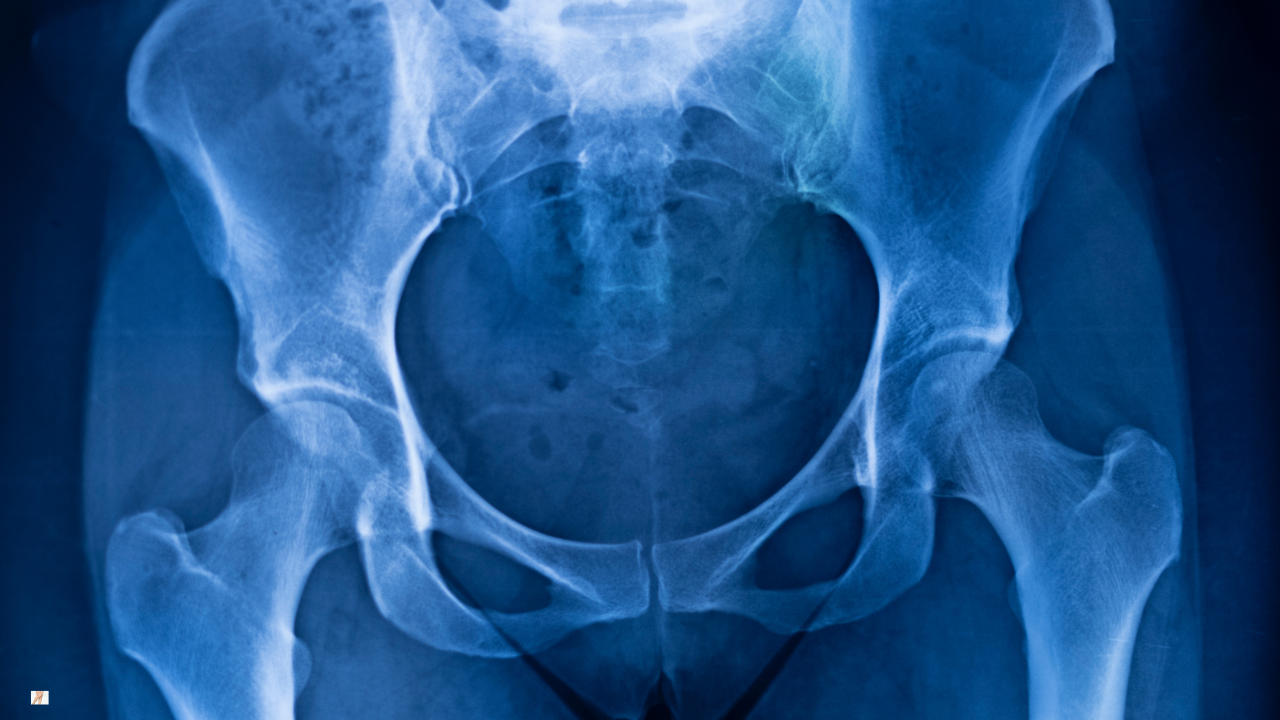
An X-ray is the primary investigation used to diagnose acetabular dysplasia.

It shows the shape and orientation of the acetabulum (the socket) and how much of the femoral head is covered. Measurements such as the lateral centre-edge angle help determine whether the socket is shallow and by how much.

X-rays are particularly useful because dysplasia is a bony alignment issue. They allow clinicians to assess structural coverage and joint orientation under load.

An MRI scan is not primarily used to diagnose dysplasia itself. Instead, it assesses the soft tissue structures affected by altered joint mechanics.

Because a shallow socket changes how force passes through the hip, secondary problems can develop over time. These may include:

โ€“ Labral irritation or tearing
โ€“ Cartilage wear
โ€“ Early joint degeneration

MRI becomes particularly useful if pain is persistent, catching or locking sensations are present, or surgical planning is being considered.

It helps determine whether symptoms are primarily structural instability or whether secondary tissue damage is contributing.

A CT scan provides detailed three-dimensional information about bone shape and orientation.

It is not routinely required for every case of dysplasia. However, it may be requested when:

โ€“ Surgical correction is being considered
โ€“ Precise assessment of acetabular version is required
โ€“ Complex structural variation needs clarification

CT imaging allows surgeons to plan corrective procedures with accuracy, particularly in cases being considered for periacetabular osteotomy.

When Imaging Is Most Appropriate

Imaging is typically recommended when:

Symptoms are persistent despite appropriate rehabilitation.
There are signs of mechanical instability.
There is suspicion of associated labral injury.
Surgical opinion may be required.
There is early onset osteoarthritis without clear explanation.

Importantly, imaging findings must always be interpreted alongside symptoms and physical examination.

Many individuals have structural variations on imaging but minimal symptoms. Conversely, some people with relatively mild dysplasia on X-ray can experience significant instability-related pain.

The goal of imaging is not simply to label a hip. It is to guide decision-making โ€” whether that involves structured rehabilitation, load modification or surgical referral.

Injection Therapy โ€” Where It Fits

In selected cases, a hip joint injection can be extremely helpful.

One of its roles is diagnostic. If an injection placed into the hip joint significantly reduces symptoms, it confirms that the primary source of pain is intra-articular. That information can be valuable when symptoms are complex or when surgical decision-making is being considered.

However, injections can also have therapeutic value.

When a hip has become highly irritable, pain itself can drive guarding, reduced neuromuscular control and protective movement patterns. In these situations, an injection can calm sensitivity enough to allow more normal movement to resume. This reduction in pain can create an opportunity to restore balanced muscle activation and progress rehabilitation more effectively.

In other words, the injection does not โ€œfixโ€ the shape of the joint โ€” but it can reduce the pain that is preventing the joint from functioning well.

Used appropriately, this window can be powerful.

Injection is not a standalone treatment. Without structured rehabilitation to address control, load tolerance and coordination, symptoms often return once the effect wears off. When combined with targeted rehabilitation, however, it can accelerate progress and improve confidence in movement.

Decisions around injection are made carefully, based on symptom behaviour, response to rehabilitation and overall goals.

When Is Surgery Considered?

In more pronounced cases of dysplasia, particularly where structural under-coverage is significant and symptoms persist despite structured rehabilitation, surgical opinion may be appropriate.

Periacetabular osteotomy (PAO) is the procedure most commonly discussed. This surgery reorients the socket to improve coverage.

Such decisions are complex and made within specialist orthopaedic pathways. The majority of individuals with mild to moderate dysplasia do not require surgical intervention.

Where surgical pathways are considered, rehabilitation remains central both before and after operative management.

In more advanced cases where structural alignment and cartilage health have deteriorated significantly, joint replacement may occasionally be discussed as part of long-term management. You can read more about our specialist post total hip replacement rehabilitation pathway hereโ†’

Flare-Ups โ€” Why Symptoms Sometimes Escalate

Many people with acetabular dysplasia describe periods where the hip feels suddenly more tired, unstable or achy. It may follow a longer walk than usual, standing for extended periods, a change in exercise routine or even a busy week that involved more time on your feet.

This is a flare.

A flare in dysplasia does not usually mean the socket has become โ€œmore shallowโ€ or that damage has suddenly occurred. It reflects a temporary increase in sensitivity within a joint that already has reduced structural coverage.

Because the socket provides less bony containment, the surrounding muscles play a larger role in stabilising the hip during movement. When those muscles fatigue or when activity volume increases beyond current tolerance, more demand is placed on the labrum and supporting soft tissues.

If that demand exceeds what the hip can comfortably tolerate at that time, symptoms increase.

The body responds protectively. Muscles around the hip and pelvis may tighten to create a sense of stability. Walking may feel slightly guarded. The hip may ache more at the end of the day. Some people describe a sense of heaviness or reduced endurance rather than sharp pain.

This is not necessarily structural worsening.
It is load sensitivity.

Understanding this distinction is important.

Complete withdrawal from movement can reduce muscular support further and increase deconditioning. Pushing through fatigue aggressively can prolong irritability. The appropriate response usually lies between these extremes: temporarily reducing prolonged standing or high-demand activity while maintaining controlled, supported movement.

As irritability settles and muscular support is restored, symptoms typically reduce again.

Over time, as dynamic stability improves and endurance increases, flares tend to become less frequent and less intense. The hip becomes more tolerant of sustained activity.

That progression is not random. It reflects improved load distribution and neuromuscular support.

When to Seek Specialist Assessment

If you have been told you have acetabular dysplasia, are unsure what imaging findings mean, or continue to experience groin pain despite previous treatment, specialist assessment can provide clarity.

Dysplasia is a structural variation, but symptoms arise from how the joint behaves under load. The distinction between structural under-coverage, labral irritation and secondary muscular compensation is not always obvious without detailed evaluation.

Assessment within our Gosport clinic focuses on understanding irritability, dynamic stability and load tolerance rather than relying solely on imaging measurements. This allows differentiation between hips that can be managed effectively with structured rehabilitation and those that may require surgical opinion.

The aim is not to medicalise a variation in anatomy. It is to determine the most appropriate pathway for your specific hip.

Long-Term Outlook

Acetabular dysplasia is a structural variation, but structure alone does not determine outcome.

Many individuals with mild to moderate dysplasia maintain good joint function for decades, particularly when muscular support and load management are optimised. The hip is an adaptive joint. When stability is supported dynamically by balanced muscle control, symptoms can be significantly reduced and long-term function maintained.

In some cases, however, reduced socket coverage can increase stress on the labrum and cartilage over time. This does not mean deterioration is inevitable, but it does mean that symptom behaviour should be monitored and managed thoughtfully.

Where symptoms remain well controlled and strength is maintained, progression is often slow or minimal. Where instability persists and load tolerance remains low, secondary joint changes may develop gradually.

Understanding this spectrum is important.

For those who wish to understand how joint degeneration develops and how it is managed, you can read more about hip osteoarthritis hereโ†’

In more advanced cases โ€” particularly where cartilage loss becomes significant and symptoms impact quality of life โ€” joint replacement may form part of the longer-term pathway. You can read more about our specialist post total hip replacement rehabilitation service hereโ†’

The objective is not to predict deterioration. It is to optimise the mechanical environment of the hip now, so that long-term joint health is supported as effectively as possible.

Frequently Asked Questions About Acetabular Dysplasia

Book a Specialist Hip Assessment in Gosport

If you have been told you have acetabular dysplasia or are experiencing persistent groin pain and uncertainty about imaging findings, specialist appointments are available at our Gosport clinic.

Assessment is detailed, measured and focused on restoring confident, resilient hip function

Book Your Specialist Hip Assessment

Acetabular dysplasia rehabilitation forms part of our specialist hip service. You can explore our full hip rehabilitation pathway here โ†’