
Anterior Cruciate Ligament (ACL) Injuries
Specialist ACL Assessment and Rehabilitation in Gosport, Emsworth and Clanfield
Book your knee specialist appointment onlineAnterior cruciate ligament (ACL) injuries are among the most significant ligament injuries affecting the knee. The ACL is one of the primary stabilising structures of the joint, connecting the femur (thigh bone) to the tibia (shin bone). Its role is to control forward movement of the tibia and provide rotational stability during dynamic activities such as running, pivoting, jumping and sudden changes of direction.
When the ACL is injured, the knee may feel unstable, swollen and difficult to trust during movement. These injuries are particularly common in sports that involve rapid deceleration or cutting movements, including football, rugby, netball, basketball and skiing.
At Solent Specialist Physiotherapy, ACL injuries are assessed and managed within our specialist knee service by Band 8–level physiotherapists working at advanced level across both NHS and private practice. Management focuses not only on the ligament injury itself but on restoring the mechanical stability and neuromuscular control that allow the knee to function confidently again.
How ACL Injuries Occur
Most ACL injuries occur through a combination of sudden deceleration, twisting and rotational loading through the knee joint. This commonly happens when an athlete plants their foot and changes direction rapidly, or when landing from a jump with the knee slightly flexed and rotating.
In these situations, the forces passing through the knee can exceed the tensile strength of the ligament. The ACL may stretch, partially tear or rupture completely.
Contact injuries can also occur, such as a collision during sport, but a large proportion of ACL injuries occur without direct contact. Instead, they arise from the complex interaction between speed, momentum and joint alignment during movement.
Because the ACL works together with other structures to stabilise the knee, injury to this ligament is often associated with damage to other tissues within the joint. Twisting injuries that damage the ACL may also injure the meniscus, as both structures are exposed to rotational forces during sudden changes of direction. You can read more about meniscal tears and knee cartilage injury here→
How ACL injuries are categorised:
ACL injuries are commonly described according to the degree of ligament damage.
Grade 1: Mild Sprain
The ligament has been slightly overstretched, leading to microscopic tears, but it remains intact and capable of stabilizing the knee joint.
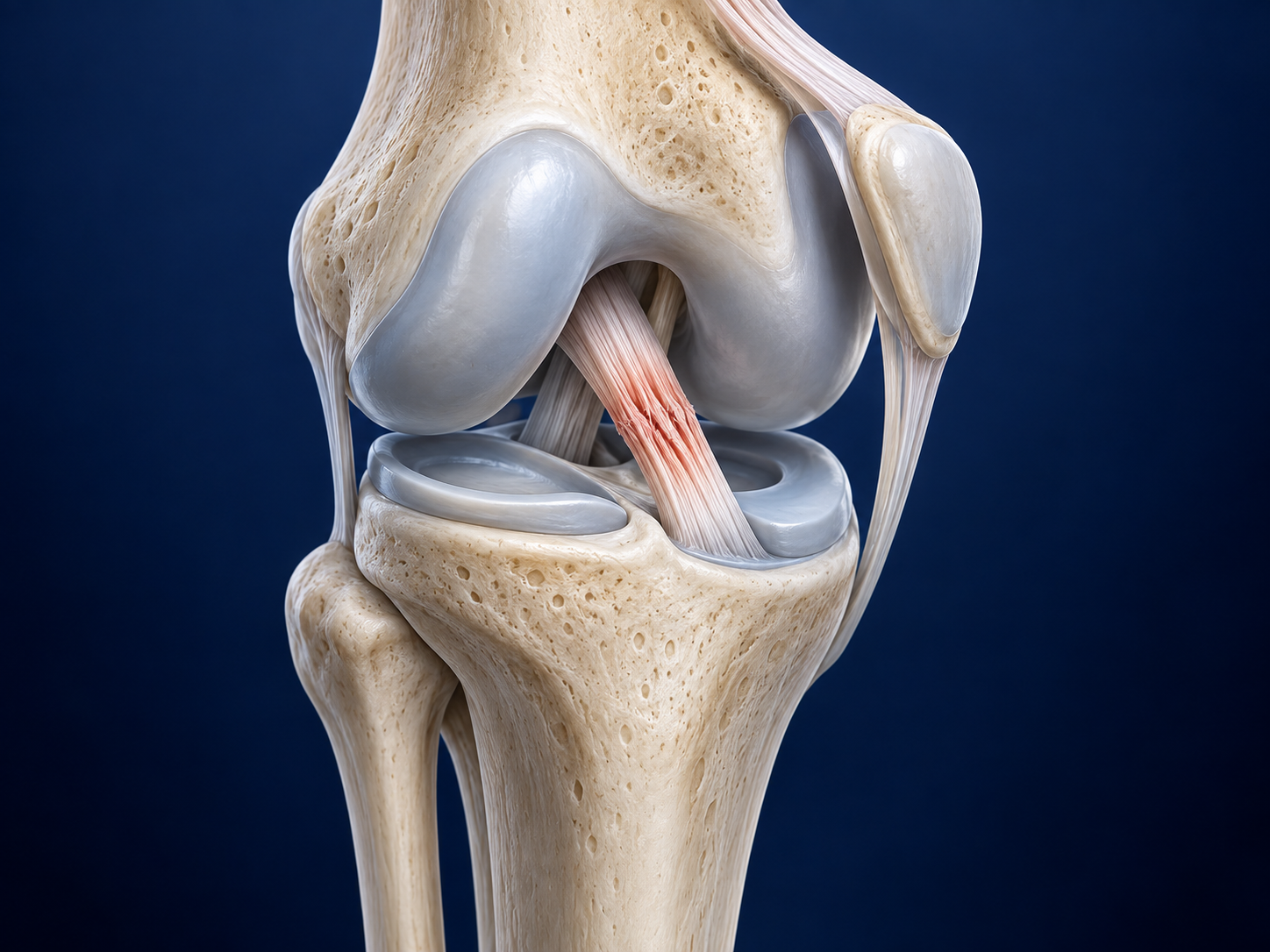
Grade 2: Moderate Sprain (Partial Tear)
More significant injuries involve partial tearing of the ligament fibres. This may create some degree of instability within the knee, particularly during pivoting or cutting movements.
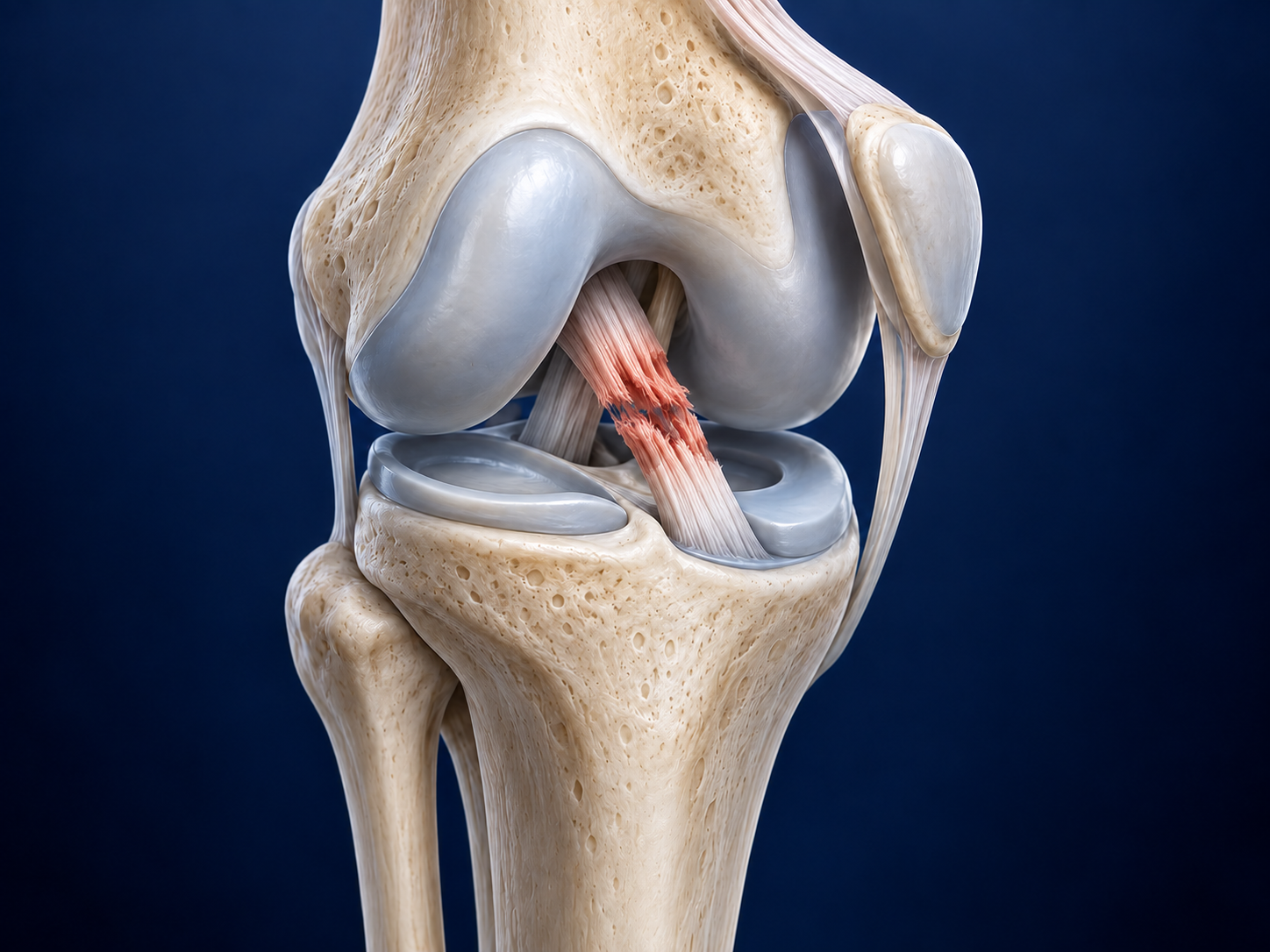
Grade 3: Complete Tear
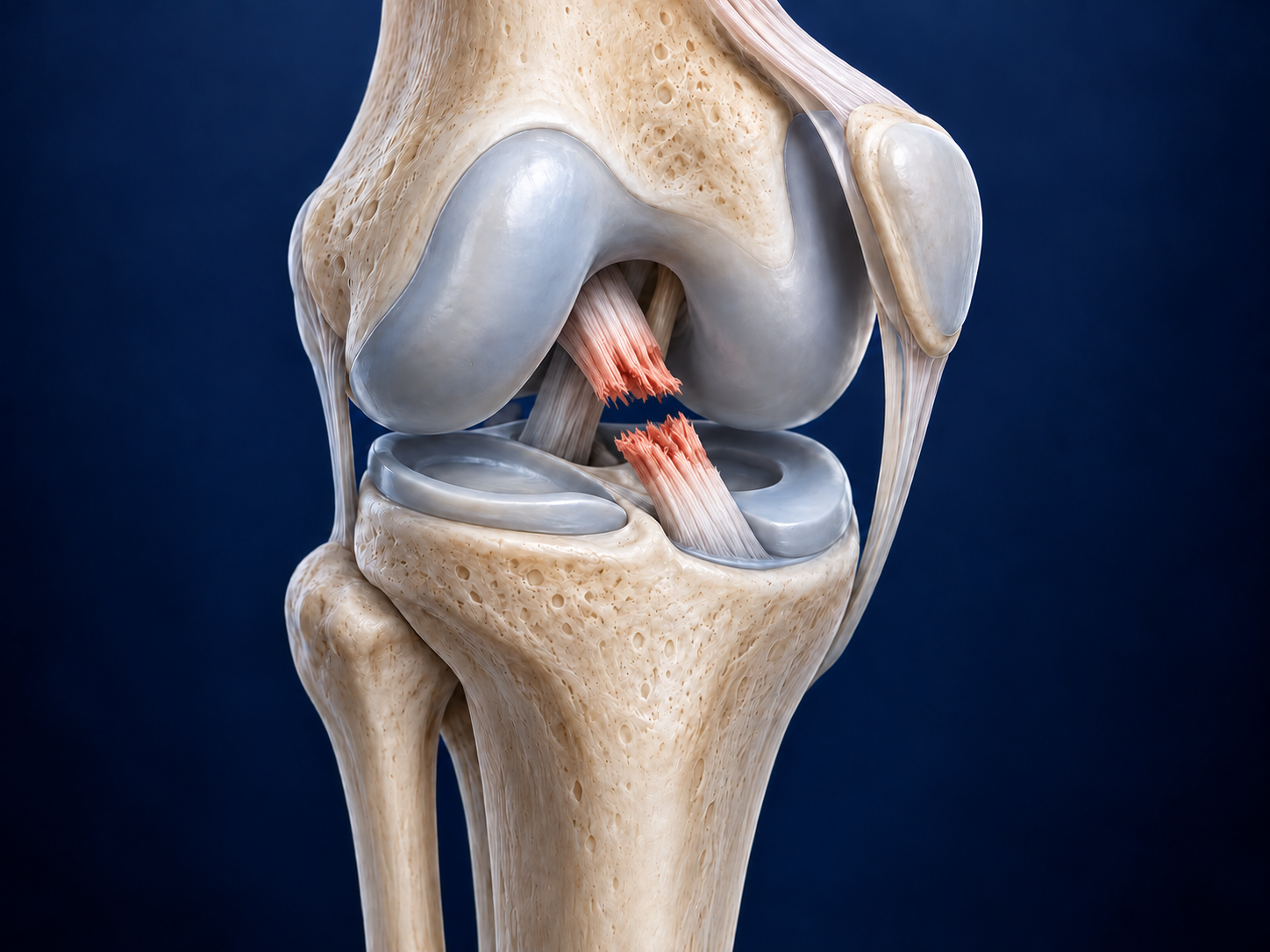
A complete rupture occurs when the ligament fibres tear entirely and the ACL can no longer provide mechanical stability to the joint. In this situation the knee may feel unstable or prone to giving way, particularly during dynamic activity.
In summary, an ACL sprain refers to a Grade 1 or Grade 2 injury, where the ligament has sustained mild to moderate damage but remains partially intact. An ACL tear typically denotes a Grade 3 injury, where the ligament is completely torn and cannot perform its stabilizing function.
The severity of the injury, combined with the functional demands of the individual, influences whether management focuses on rehabilitation alone or involves surgical reconstruction.
Symptoms of an ACL Injury
ACL injuries often produce a recognisable pattern of symptoms. Many people describe hearing or feeling a “pop” within the knee at the moment of injury, followed by rapid swelling within the joint. Pain may initially be significant and weight-bearing may feel difficult.
As the acute swelling settles, individuals often report a sense that the knee feels unstable or unreliable. This is sometimes described as the knee “giving way” during walking, turning or descending stairs.
Loss of full range of motion can also occur, particularly in the early stages after injury. Restoring comfortable movement and controlling swelling are therefore important early rehabilitation goals.
Specialist Assessment of ACL Injury
Accurate diagnosis of ACL injury requires careful clinical examination. Assessment begins with understanding the mechanism of injury and how symptoms developed. A twisting event followed by rapid swelling is often strongly suggestive of ligament involvement.
Physical examination evaluates knee stability, joint swelling and range of motion. Specific clinical tests assess the integrity of the ACL by examining how the tibia moves relative to the femur when gentle forces are applied.
Specialist assessment also considers the behaviour of the knee under load. Observing how the individual walks, balances and moves provides valuable information about the functional stability of the joint.
This broader biomechanical evaluation allows clinicians to understand how the injury affects knee control and helps guide decisions about rehabilitation or surgical referral.
Imaging for ACL Injuries
MRI is the most commonly used imaging investigation for ACL injuries because it allows detailed visualisation of the ligament and surrounding joint structures.
In addition to confirming the presence of an ACL tear, MRI can identify associated injuries such as meniscal tears, cartilage damage or bone bruising. These additional findings often influence management decisions.
Plain X-ray imaging may also be performed to assess the overall alignment of the knee and to exclude associated bony injury.
As with other musculoskeletal conditions, imaging findings are always interpreted alongside clinical examination to ensure the diagnosis reflects both structural findings and functional symptoms.
Bone Bruising and Associated Injuries After ACL Rupture
When the ACL ruptures, the injury rarely affects the ligament alone. The forces that cause the ligament to tear are often transmitted through the surrounding joint structures, which can result in additional findings within the knee.
One of the most common associated features seen on MRI after ACL rupture is bone bruising. This occurs when the femur and tibia impact against each other during the injury, creating microscopic damage within the bone marrow. Although it is not a fracture, this bone marrow oedema can contribute to pain and swelling within the knee during the early stages of recovery. You can read more about bone bruising here→
ACL injuries are also frequently associated with meniscal injury, particularly involving the medial meniscus. The menisci help stabilise the knee during rotational movements, and when the ACL fails these structures may be exposed to increased stress. In some cases this can lead to tearing of the cartilage tissue. Specific information on meniscal injuries can be found here→
In addition, the articular cartilage that lines the joint surfaces can occasionally sustain damage during the injury. These associated injuries may influence both symptoms and long-term joint health, which is why careful assessment and appropriate rehabilitation are essential following ACL rupture.
Understanding the full pattern of injury helps guide treatment decisions and ensures rehabilitation addresses not only the ligament injury but the overall function of the knee joint.
Why Some People Function Well Without an ACL
Although the ACL plays an important role in knee stability, not every individual with a torn ACL requires surgical reconstruction.
Some people are able to return to everyday activities and even recreational sport through rehabilitation alone. Through strengthening, neuromuscular training and improved movement control, the muscles surrounding the knee can compensate for the absence of the ligament and help maintain functional stability.
Others experience repeated episodes of instability despite strengthening and rehabilitation. These individuals may struggle with activities that involve pivoting, rapid direction changes or uneven surfaces. In these situations surgical reconstruction may be recommended to restore mechanical stability.
The decision between surgical and non-surgical management therefore depends not only on the injury itself but on how the knee behaves during functional activity. Factors such as the individual’s sport, occupation, movement patterns and rehabilitation response all play an important role in determining the most appropriate pathway.
Specialist assessment helps identify which individuals are likely to function well with rehabilitation alone and which may benefit from surgical input.
When Is Surgery Considered?
Management of ACL injuries can be either surgical or non-surgical depending on the severity of the injury and the functional demands of the individual.
Some people are able to return to their desired activities through structured rehabilitation alone. Strengthening the muscles around the knee and improving neuromuscular control can allow the joint to remain stable despite ligament injury.
However, individuals who participate in sports that involve cutting, pivoting or rapid directional changes may experience repeated instability without surgical reconstruction. In these cases ACL reconstruction may be recommended to restore mechanical stability to the joint.
Decisions regarding surgery are made collaboratively between the patient, physiotherapist and orthopaedic specialist, taking into account the individual’s goals, activity level and response to rehabilitation. You can read more about ACL reconstruction surgery here→
Rehabilitation After ACL Injury
Rehabilitation plays a central role in recovery from ACL injury, whether surgery is performed or not.
Early rehabilitation focuses on controlling swelling, restoring full knee extension and re-establishing comfortable movement. As symptoms settle, attention shifts toward rebuilding strength within the quadriceps, hamstrings and surrounding muscles that support the knee.
Later stages of rehabilitation involve restoring dynamic stability, coordination and movement control. Exercises progressively challenge the knee through single-leg loading, directional changes and sport-specific movements.
Return to sport is guided by objective measures of strength, stability and functional performance rather than simply the passage of time. This structured approach reduces the risk of reinjury and allows athletes to return to activity with greater confidence.
ACL Injury Prevention
Because many ACL injuries occur during dynamic movement rather than direct contact, neuromuscular training plays an important role in reducing injury risk.
Improving lower limb strength, landing mechanics and movement control helps distribute forces more efficiently through the knee during sport. Training programmes that focus on strength, balance and coordination have been shown to reduce the incidence of ACL injury in certain athletic populations.
Specialist physiotherapy assessment can identify movement patterns that increase stress on the knee and guide targeted training strategies to improve joint stability.

Long-Term Outlook
Recovery from ACL injury depends on several factors, including the severity of the injury, associated damage within the joint and the individual’s activity demands.
With appropriate rehabilitation, many individuals regain excellent knee function and return to sport or physical activity. Even following surgical reconstruction, structured physiotherapy remains essential to restore strength, stability and movement confidence.
Long-term knee health depends not only on the ligament itself but also on the muscular support and movement control that protect the joint during dynamic activity.
Specialist Knee Rehabilitation
ACL injury management forms part of our specialist knee rehabilitation service. You can explore our full knee assessment and rehabilitation pathway here→
Book a Specialist Knee Assessment
If you have experienced a knee injury involving swelling, instability or a feeling that the knee may give way, a specialist assessment can help clarify the diagnosis and guide the most appropriate management.
Appointments are available within our specialist knee clinics in Gosport, Emsworth and Clanfield. Book online or contact us→
Book a specialist knee appointment online