
Specialist Thoracic (Mid-Back) Physiotherapy
Book a thoracic spine appointment onlineMid-back pain can significantly affect sitting, sleep, breathing, lifting and upper-body movement. Symptoms may be felt between the shoulder blades, around the ribs or across the mid-back, and can sometimes be aggravated by twisting or deep breathing.
Specialist thoracic-spine assessment and rehabilitation are available at our Emsworth and Rowlands Castle clinics, delivered by Mike Saegert and Kathryn Palmer. Both are experienced spinal clinicians working at Band 8 specialist level and assess the full range of thoracic and mid-back presentations, including persistent or recurring pain, rib-related symptoms, joint stiffness, complex spinal problems and symptoms that have not improved with previous treatment.
Our focus is on high-level assessment, clear diagnosis and evidence-based rehabilitation, helping you understand the factors contributing to your symptoms and providing a structured plan for treatment and recovery.
More Than an Exercise Programme
Our spinal clinicians provide specialist assessment, diagnosis and rehabilitation, with access to imaging referral and interpretation and coordinated onward referral to pain-management, spinal injection or surgical services where clinically appropriate.

Mike Saegert
Spinal, Hip & Knee Specialist
Emsworth
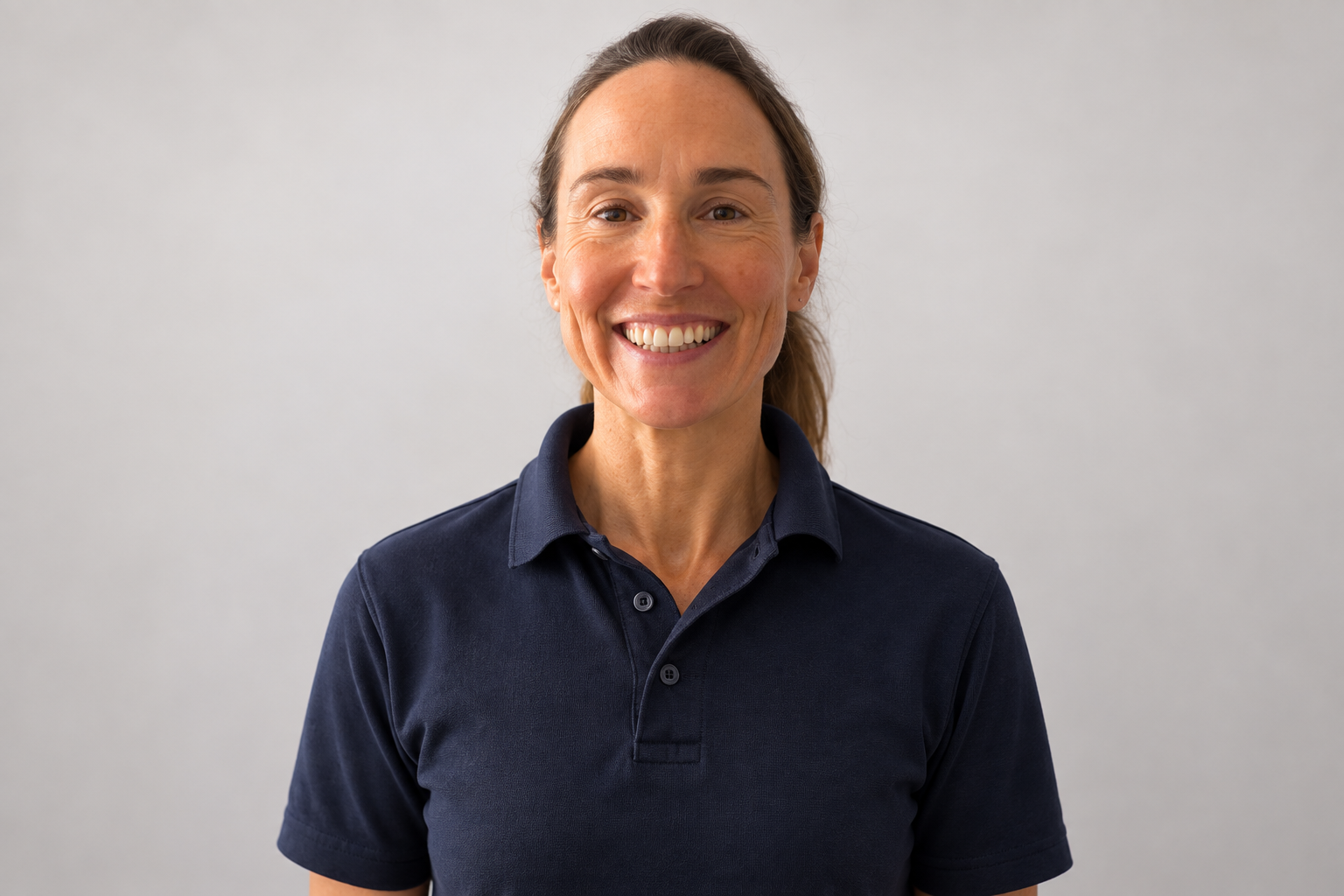
Kathryn Palmer
Spinal Specialist
Emsworth
Why mid-back problems need specialist care
The thoracic spine is designed to provide stability while allowing controlled rotation and expansion of the rib cage for breathing. Pain in this region may arise from joint irritation, rib joint restriction, muscular overload, breathing pattern changes or altered movement strategies.
Symptoms are frequently attributed solely to “poor posture,” yet posture alone rarely explains persistent discomfort. Similarly, imaging findings such as mild degenerative change do not always correlate with symptom behaviour.
Thoracic pain may also be influenced by cervical or lumbar mechanics, shoulder loading patterns or protective guarding following previous injury.
Specialist assessment considers thoracic and rib movement, breathing mechanics, muscular control, adjoining spinal regions and tolerance to everyday or sporting loads. This helps identify the factors most relevant to your symptoms and allows rehabilitation to be tailored accordingly.
Explore Thoracic Spine Conditions
Select the condition or rehabilitation pathway most relevant to you below to find out more. If your condition is not shown, we can still help. If you are unsure what is causing your symptoms, a specialist assessment can help identify the most likely source of your pain.
Mid-Back Pain & Stiffness
Persistent or recurring mid-back pain
Thoracic stiffness between the shoulder blades
Postural and desk-related thoracic pain
Rib & Referred Pain
Rib-related pain and joint restriction
Breathing-related thoracic discomfort
Pain referred from the neck or lower back
Joint, Conditions & Rehabilitation
Thoracic outlet-related symptoms
Post-injury or post-surgical rehabilitation
What makes our thoracic spine service different
Thoracic spine assessment and rehabilitation is delivered by experienced physiotherapists working in senior Band 8 specialist roles within the NHS alongside their private practice. Their clinical work includes complex spinal presentations, persistent pain, neurological symptoms, post-operative rehabilitation, imaging pathways and collaboration with medical and surgical teams.
This depth of experience is particularly valuable when symptoms have persisted despite previous treatment, the diagnosis is not immediately straightforward, or symptoms involve several adjoining areas such as the neck, ribs, shoulders or lower back.
Many individuals attending with mid-back pain have previously received general advice focused on posture correction alone. While posture may contribute, persistent symptoms often involve more complex interactions between joint mobility, breathing mechanics and muscular coordination.
Specialist evaluation examines how your thoracic spine behaves during rotation, lifting, sitting, overhead activity and breathing. It considers irritability profile, rib motion, movement control and load distribution across the upper trunk.
Rehabilitation is structured around restoring mobility where needed, improving rib and breathing mechanics, refining movement control and gradually increasing tolerance to functional load.
For joint-driven pain, management focuses on restoring segmental mobility and balanced activation. In rib-related discomfort, treatment addresses both joint mechanics and breathing pattern integration. For persistent mechanical pain, progression builds resilience through graded load exposure rather than avoidance.
Programmes are individualised and progression is guided by symptom behaviour and functional tolerance rather than fixed timelines.
Care is guided by advanced clinical reasoning and specialist experience rather than protocol-driven or generic rehabilitation approaches.
Where clinically appropriate, we can request and interpret imaging to help clarify the diagnosis. Scan findings are considered alongside your symptoms, examination and mechanical behaviour rather than relying on the report wording alone.
We can also liaise with appropriate pain-management and spinal services when interventions such as facet-joint injections or a specialist spinal opinion may be appropriate. This integrated approach helps ensure that rehabilitation, further investigation and onward referral are coordinated around your individual clinical needs.
Book Your Specialist Thoracic Spine Appointment
Specialist thoracic and mid-back appointments are available at our Emsworth and Rowlands Castle clinics. Both clinicians provide specialist assessment and rehabilitation across the full range of thoracic-spine conditions.
Assessment includes detailed evaluation, clear explanation of the likely source of your symptoms and an individually tailored treatment and rehabilitation plan.
Online booking is available for self-funding spinal appointments with Mike Saegert in Emsworth and Kathryn Palmer in Rowlands Castle. If you have WPA insurance, please contact us before booking.
Our specialist spinal clinics run on Fridays, and appointments may book several weeks in advance. If no appointments are showing online for your chosen clinician, please contact us, as additional availability may sometimes be possible.
Prefer to Speak to Us First?
If you are unsure which clinician to book with, would prefer not to book online or have a question before arranging your appointment, please contact us and we will help direct you to the most appropriate specialist.
Email: [email protected]
Telephone: 0330 133 9090
Or complete the enquiry form below and we will get back to you.
