
Elbow Tendinopathy
Specialist Physiotherapy for Tennis and Golfer’s Elbow in Fareham
Contact us to book your elbow specialist appointmentElbow tendinopathy is a common cause of persistent elbow pain, often affecting gripping, lifting, typing, gym training and racquet sports. Although frequently labelled as “tennis elbow” or “golfer’s elbow,” the condition affects far more than athletes and often develops gradually without a single injury.
At Solent Specialist Physiotherapy, management focuses on accurate diagnosis, restoring tendon load capacity and supporting confident return to work, sport and daily activity.
The condition involves irritation and reduced load tolerance of the forearm tendons where they attach to the bony prominences of the elbow. In lateral elbow tendinopathy, pain occurs on the outside of the elbow. In medial elbow tendinopathy, symptoms develop on the inner side.
Persistent elbow pain is rarely driven by inflammation alone. In most cases, it reflects a mismatch between repetitive mechanical demand and the tendon’s ability to tolerate load.
Why Does Elbow Tendinopathy Develop?
Elbow tendinopathy develops when repetitive gripping or wrist activity exceeds the tendon’s adaptive capacity.
This may occur with increased gym loading, racquet sports, manual work, prolonged keyboard use, DIY tasks or sudden changes in activity levels. Even small increases in gripping demand can trigger symptoms if the tendon has not been conditioned appropriately.
Over time, the tendon may become thicker and more sensitive. Continuing repetitive loading without progressive strengthening can perpetuate symptoms.
Contrary to common advice, complete rest rarely restores tendon resilience. Recovery depends on structured, progressive loading.
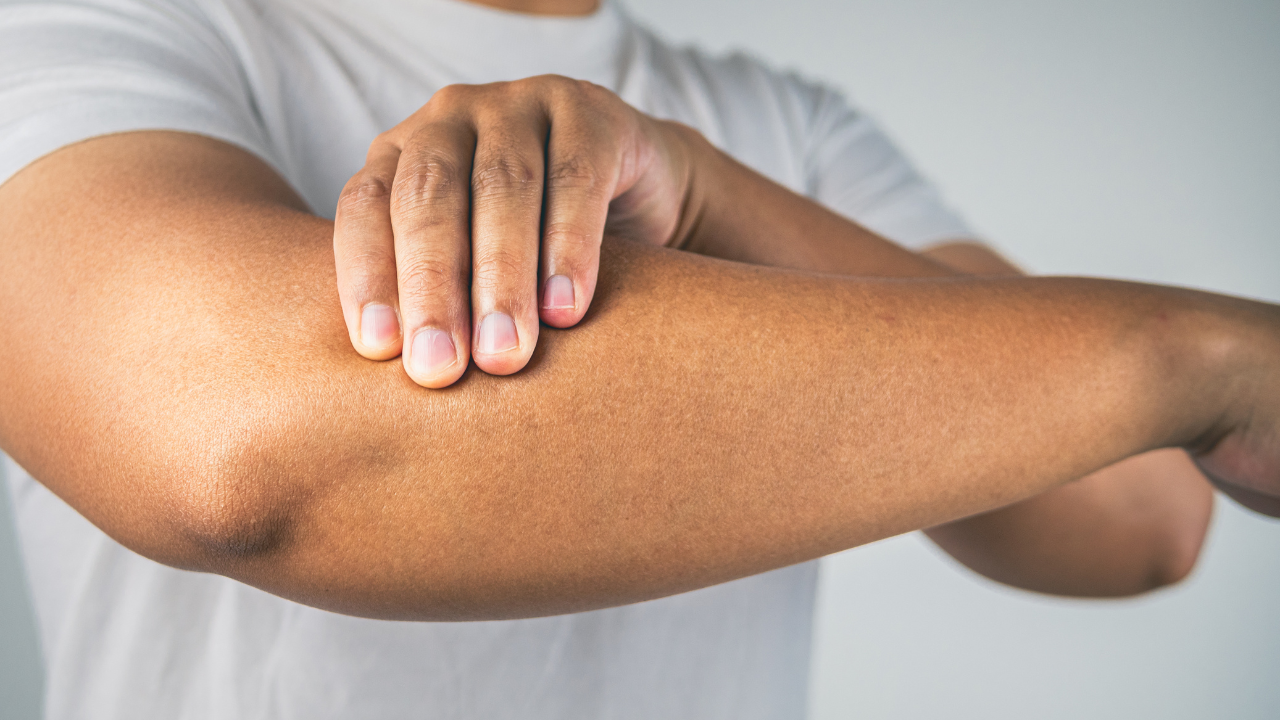
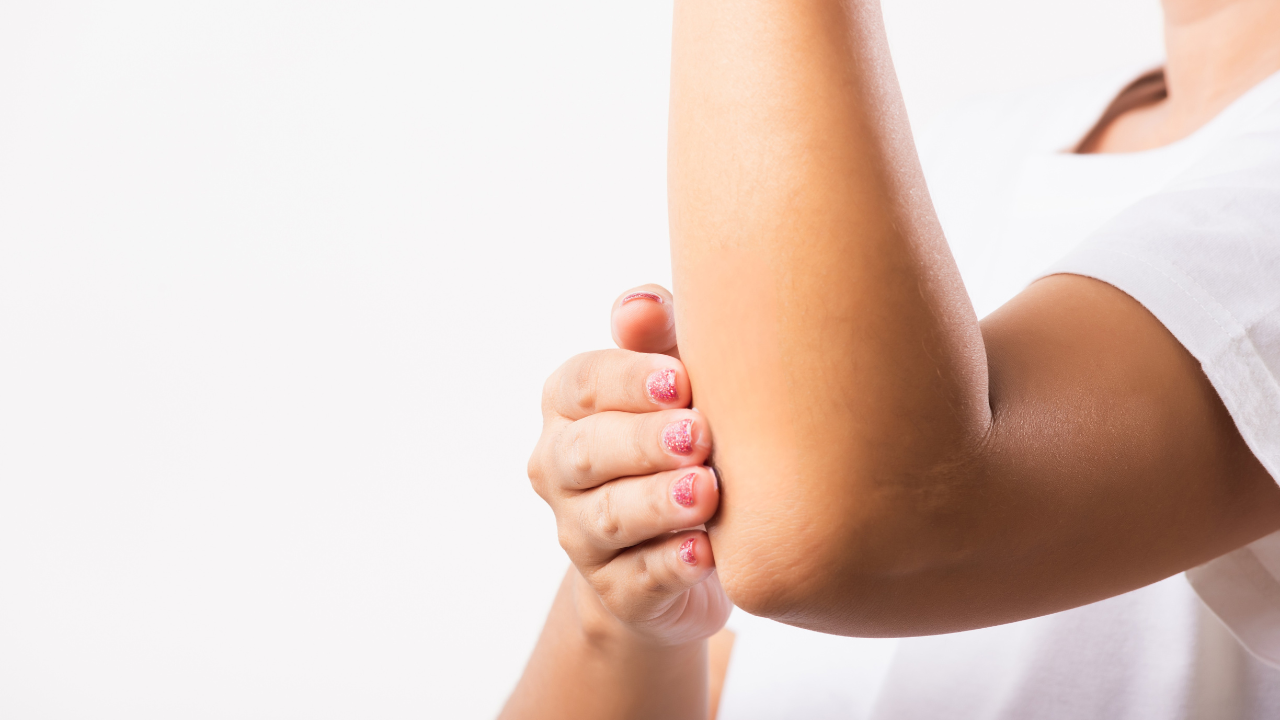
How Elbow Tendinopathy Commonly Presents
Tennis elbow typically causes pain on the outer elbow that may radiate into the forearm. Gripping objects, lifting a kettle, shaking hands or extending the wrist against resistance often provoke discomfort.
Golfer's elbow tendinopathy causes pain on the inner elbow and is commonly aggravated by gripping, wrist flexion or forearm rotation.
Symptoms often fluctuate depending on hand demand. Many people notice discomfort after repetitive tasks rather than during complete rest.
Unlike nerve-related conditions, tendon pain is usually localised and reproducible with resisted loading.
Is It Really Elbow Tendinopathy?
Pain around the elbow may also arise from radial tunnel syndrome, cervical spine referral, joint pathology or nerve irritation.
Specialist assessment focuses on controlled tendon loading tests, grip strength evaluation and exclusion of alternative diagnoses.
Accurate diagnosis is essential because management strategies differ significantly between tendon irritation and nerve-related pain.
Imaging: When Is It Necessary?
Elbow tendinopathy is primarily a clinical diagnosis.
Ultrasound or MRI imaging may show tendon thickening or degenerative changes. However, structural findings are also common in people without symptoms and do not reliably correlate with pain severity.
Imaging is usually reserved for cases that fail to progress with structured rehabilitation or where alternative pathology is suspected.
Scans are interpreted within the clinical context rather than used in isolation.
Understanding Flare-Ups
Elbow tendinopathy frequently fluctuates.
Flares commonly occur after increased gripping demand, heavier gym sessions, prolonged keyboard use or repetitive manual tasks. During these periods the tendon becomes temporarily more sensitive, and activities that were manageable may provoke pain.
A flare represents temporary tendon irritability rather than worsening structural damage.
Management focuses on temporarily modifying aggravating tasks while maintaining controlled strengthening to support tendon adaptation.
Complete avoidance of hand use often delays recovery.
Injection Therapy for Tennis and Golfers Elbow
Corticosteroid injection can sometimes be considered when tennis elbow is particularly painful or irritable and symptoms are making everyday activity or rehabilitation difficult.
Reducing pain may provide a useful opportunity to restore movement and progress strengthening. Because longer-term recovery depends on rebuilding the tendon’s ability to tolerate load, injection therapy is considered alongside a structured rehabilitation plan.
Considering an Injection?
Explore Tennis Elbow Injection Therapy →
Explore Golfer’s Elbow Injection Therapy →
How We Help Tennis and Golfer's Elbow
At Solent Specialist Physiotherapy, management begins with detailed assessment of grip behaviour, tendon loading patterns and upper limb strength.
Early rehabilitation focuses on reducing pain sensitivity while maintaining appropriate tendon load. Progressive strengthening is then introduced to stimulate adaptation and restore tolerance to gripping and lifting.
Later stages may include higher-load or sport-specific activity depending on occupational and athletic demands. Attention is given to gradual progression and long-term resilience to reduce recurrence.
Where symptoms fail to progress as expected, further investigation or additional management options such as steroid injection may be discussed within a structured plan of care.
Our aim is not simply to settle pain temporarily, but to restore durable tendon capacity and confident hand function.
Understanding Tendinopathy
Elbow tendinopathy is one of several tendon conditions we treat. If you would like to understand more about how tendon pain develops and why progressive loading is central to recovery, you can read our overview on specialist physiotherapy for tendinopathy.
Book a Specialist Upper Limb Assessment
If you are experiencing persistent outer or inner elbow pain suggestive of elbow tendinopathy, specialist physiotherapy appointments are available at our Fareham clinic with Mike Gillingham
Assessment focuses on accurate diagnosis, restoring tendon capacity and supporting confident return to work and activity.
Contact us to book your specialist elbow assessment
