
Patellofemoral (Kneecap) Pain
Specialist patellofemoral (pain at the front of the knee) Assessment and Rehabilitation in Gosport, Emsworth and Clanfield
Book your knee specialist appointment onlinePatellofemoral pain is one of the most common causes of pain at the front of the knee. It is felt around or behind the kneecap and is typically aggravated by activities that increase load through the patellofemoral joint, such as running, squatting, lunging, climbing stairs, going downhill or sitting for prolonged periods with the knee bent. Although it is often referred to as “runner’s knee,” it affects not only runners but also adolescents, active adults and people whose symptoms begin after a change in activity, training load or general function.
The condition does not usually arise because one single structure has suddenly been damaged. More commonly, it develops when the joint between the kneecap and the femur becomes overloaded over time. That overload may be influenced by strength deficits, reduced control around the hip and knee, training error, changes in footwear or surfaces, altered biomechanics, or a mismatch between what the joint is being asked to do and what the surrounding tissues are ready to tolerate. Modern best-practice guidance therefore focuses less on simplistic ideas such as “the kneecap being out of place” in isolation, and more on understanding the overall loading environment of the knee and restoring its ability to tolerate movement again.
At Solent Specialist Physiotherapy, patellofemoral pain is assessed within our specialist knee service by advanced Band 8–level physiotherapists with expertise across complex knee presentation, biomechanics and rehabilitation. Assessment looks beyond the painful area itself and examines why the joint is becoming overloaded, which movements provoke symptoms, and what needs to change to restore comfortable, confident function.
How Patellofemoral Pain Develops
The patellofemoral joint is formed by the underside of the kneecap and the groove at the front of the femur. As the knee bends and straightens, the kneecap moves within this groove while the quadriceps generate force to control the limb. During activities such as stair climbing, hill running, squatting and landing, the compressive forces passing through this joint rise substantially. When these forces are repeated more than the joint can tolerate, pain can develop.
This is why symptoms often come on gradually rather than after one dramatic injury. A person may increase running mileage, return to the gym after time away, start hill training, change sports volume, or spend more time squatting and kneeling at work. In others, symptoms appear during adolescence when activity levels are high and tissue loading changes quickly. In all of these situations, the problem is less about a single torn structure and more about sensitivity developing in a joint that is being repeatedly stressed.
Patellofemoral pain is also rarely explained by the knee alone. The way the trunk, pelvis, hip, knee, ankle and foot work together influences how force is transferred through the limb. If the hip muscles do not control femoral motion effectively, if the knee repeatedly moves into positions that increase patellofemoral stress, or if running and loading patterns change abruptly, the front of the knee may become the area that starts to complain. This is one reason specialist rehabilitation often needs to address the whole kinetic chain rather than focusing only on the kneecap itself.
Patellofemoral Pain Is Not Always “Cartilage Damage”
One of the most important parts of explaining patellofemoral pain is reassuring people that pain at the front of the knee does not automatically mean the cartilage under the kneecap is worn out or permanently damaged. Terms such as “chondromalacia patellae” are often used loosely, but they do not accurately describe every case of patellofemoral pain. Many people with significant symptoms have no major structural abnormality on imaging, while others may show imaging changes that are not the main driver of their pain.
For this reason, specialist management is based primarily on the clinical picture rather than assuming that crepitus, clicking or front-of-knee discomfort means there is major joint damage. The key question is usually not simply what a scan shows, but why the patellofemoral joint has become irritable and what needs to change to reduce load sensitivity and improve function.
How Anatomy Can Influence Patellofemoral Pain
Although patellofemoral pain is often related to loading, strength and movement control, individual anatomy can also influence how force is transmitted through the front of the knee. The shape of the patella, the depth of the groove it moves within, overall limb alignment, femoral rotation and foot posture can all affect the way load is shared across the patellofemoral joint.
In some people, the kneecap may sit or track in a way that increases stress on certain parts of the joint when the knee bends under load. In others, the overall alignment of the leg may alter the direction in which force passes through the knee during squatting, stair climbing, running or landing. This does not necessarily mean there is anything structurally wrong, but it may mean that the joint becomes overloaded more easily if strength, control or training volume are not well matched to demand.
This is one reason why two people can perform the same activity and only one develops pain. The issue is rarely anatomy alone, and many people with similar structural features never develop symptoms at all. However, anatomy can influence the background mechanical environment in which the joint is working, and that can make the patellofemoral joint more or less tolerant of certain types of load.
From a rehabilitation perspective, this matters because treatment should not focus only on the painful area itself. If anatomy is contributing to how force is distributed through the knee, rehabilitation may need to address the way the whole limb is functioning, including hip strength, lower-limb control, foot mechanics, training load and exercise selection. The aim is not to “correct” anatomy, but to improve the knee’s ability to tolerate load within the anatomy that person has.
That section would strengthen the page because it:
Symptoms of Patellofemoral Pain
The most common symptom is a poorly localised ache at the front of the knee or around the kneecap. Some people feel it behind the kneecap, while others describe it as a diffuse pain that is difficult to pinpoint precisely. It often becomes worse during or after squatting, lunging, stair climbing, descending stairs, running, jumping, kneeling or prolonged sitting with the knee bent, such as when driving or sitting in the cinema.
Many people also report stiffness when first moving after sitting, as well as clicking, grinding or crackling from the kneecap. These noises can be alarming, but on their own they do not necessarily indicate serious structural damage. Some individuals feel the knee is weak or less trustworthy, particularly on stairs or during single-leg loading, although true mechanical instability should prompt careful assessment for other conditions such as ACL injury or patellar instability.
Because front-of-knee pain can arise from several different structures, accurate diagnosis matters. Pain from the patellar tendon, meniscus, fat pad, plica, osteoarthritis or referred pain from the hip can sometimes mimic elements of patellofemoral pain, which is why a specialist knee assessment is valuable when symptoms persist or the presentation is unclear. You can read more about patellar tendinopathy here→, meniscal tears and cartilage injury here→, ACL injury here→ and knee osteoarthritis here→.
Why Stairs, Squats and Hills Often Make It Worse
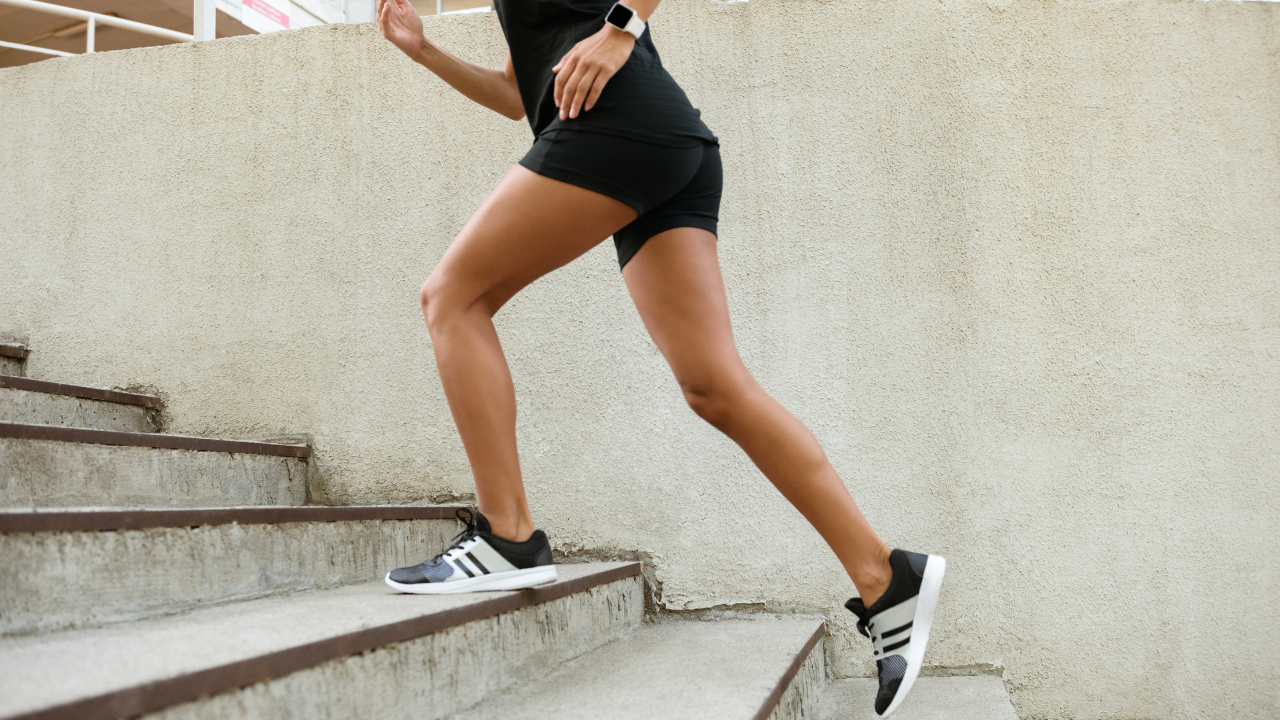
One of the classic features of patellofemoral pain is that symptoms are aggravated by tasks that load the knee while it is bent. As the knee flexes, the contact forces between the kneecap and femur increase. During squatting, stair negotiation and downhill activity, the quadriceps must work harder to control the knee, which in turn increases compression through the patellofemoral joint. In an irritated or overloaded joint, this is often enough to reproduce symptoms very reliably.
Descending stairs is particularly provocative for many people because it combines knee flexion with load acceptance and eccentric quadriceps control. This is why patients often say that going downstairs is worse than going upstairs. Understanding this loading behaviour is useful clinically because it helps distinguish patellofemoral pain from other causes of knee pain and allows rehabilitation to be graded intelligently rather than simply avoiding all painful movement indefinitely.
Specialist Assessment of Patellofemoral Pain
Assessment begins with understanding how the pain developed, what aggravates it, whether there has been any change in training or activity, and whether symptoms suggest another diagnosis. Gradual onset front-of-knee pain that worsens with stairs, running, squatting and prolonged sitting is strongly suggestive of patellofemoral pain, but it remains important to exclude other pathology such as patellar tendinopathy, meniscal injury, synovial irritation, osteochondral injury or true patellar instability.
Clinical examination looks at knee range of motion, irritability of the patellofemoral joint, quadriceps function, lower-limb strength, single-leg control, functional tasks and the way load is transferred through the hip, knee and foot. Watching someone squat, step down, hop or run often reveals more than static examination alone. In specialist practice, the goal is not merely to reproduce pain but to understand the movement behaviours and loading patterns that are perpetuating it. Assessment also considers whether anatomical factors such as limb alignment, patellar position or foot mechanics may be contributing to increased patellofemoral joint stress during movement.
This broader biomechanical reasoning is particularly important in recurrent cases and in active patients who have already tried general exercises without meaningful improvement. The diagnosis may be straightforward, but the reason symptoms persist is often more individual.
Imaging for Patellofemoral Pain
Imaging is not required for every case of patellofemoral pain. In many people, the diagnosis can be made confidently from the history and clinical examination. This is especially true when symptoms are typical, there has been no major traumatic event, and the pattern clearly reflects load-related irritation of the patellofemoral joint.
Plain X-rays may be useful if there is concern about bony alignment, osteoarthritis or other structural pathology, particularly in older patients or where symptoms are atypical. MRI may be considered if symptoms are severe, persistent, not responding as expected, or if there is suspicion of a different diagnosis such as significant cartilage injury, osteochondral pathology, loose body formation or associated intra-articular pathology. As with other specialist knee problems, imaging findings are always interpreted alongside symptoms and function rather than in isolation.
Why Patellofemoral Pain Sometimes Persists
Patellofemoral pain can become persistent if the original loading problem is not properly addressed. This does not necessarily mean the knee is deteriorating, but it does mean that the joint has remained in a sensitised, overloaded state. People often fall into a cycle of doing too much on good days and too little on painful days, which prevents the joint from adapting steadily. Others continue to push through pain without modifying volume, intensity or mechanics, especially in running and field sports.
In some cases, well-intentioned treatment also misses the mark by focusing only on isolated stretching, passive treatment or vague strengthening without properly addressing load tolerance, lower-limb control and progression back into function. Current evidence supports education and exercise as the foundation of care, with other interventions used selectively to support the overall plan rather than replace it.
Rehabilitation for Patellofemoral Pain
Rehabilitation is centred on reducing irritability, restoring confidence in loading and progressively improving the capacity of the whole lower limb to tolerate the demands being placed upon it. In the earlier stages, this may involve modifying aggravating tasks such as deep squatting, hill running, stairs volume or high-load gym work while symptoms settle. The aim is not complete rest, but smarter loading.
Exercise therapy is the cornerstone of treatment. Contemporary guidance supports strengthening that targets both the knee and the hip, because improving quadriceps function alone is often not enough. Hip strength and control influence femoral position and lower-limb mechanics, while knee-focused strengthening improves the joint’s tolerance to compressive load. In practice, successful rehabilitation often blends these approaches and progresses toward functional tasks such as step control, single-leg loading, landing and graded return to running or sport.
Supportive treatments may also have a role. Depending on the individual presentation, taping, prefabricated foot orthoses, movement retraining and selected manual therapy can help create a more comfortable window for exercise progression. These treatments are generally most useful when they support a well-structured rehabilitation programme rather than acting as stand-alone solutions.
For runners, rehabilitation often includes discussion of training structure, hills, cadence, surfaces and return-to-running progression. For gym-based patients, it may involve temporarily altering squat depth, leg press volume or plyometric exposure. For adolescents, it often means balancing school sport, club sport and recovery capacity more intelligently.
Do Insoles, Taping or Bracing Help?
Some people with patellofemoral pain improve with adjuncts such as taping or prefabricated foot orthoses, particularly when these reduce symptoms enough to allow better exercise progression. They are not universal answers, and not every patient needs them, but they can be useful when chosen for the right clinical reasons.
Bracing is more variable. A brace may sometimes improve symptom confidence, but long-term recovery still depends on addressing the loading capacity of the limb.
When Is Surgery Considered for Patellofemoral Pain?
Surgery is not usually indicated for typical patellofemoral pain. In most cases, symptoms are better understood as a load-related problem involving the way force is being transferred through the patellofemoral joint, rather than as a condition that can be “fixed” surgically. This is why treatment is usually centred on education, activity modification, strengthening and improving movement control rather than operative intervention. Best-practice guidance for patellofemoral pain supports exercise-based management as the mainstay of treatment.
It is also important to distinguish patellofemoral pain from patellofemoral arthritis and other structural intra-articular problems. Procedures such as arthroscopic washout or “tidying up” are no longer considered an appropriate treatment for straightforward anterior knee pain, and washout alone is not recommended for osteoarthritis because it has not shown meaningful clinical benefit.
That said, there are occasional situations where surgical opinion may be appropriate. One is where there is significant structural malalignment or instability contributing to abnormal patellofemoral loading, such as marked patellar maltracking, recurrent subluxation or dislocation, or bony alignment problems that are clearly driving symptoms. In these cases, procedures aimed at stabilisation or realignment may sometimes be considered, but only after careful imaging and specialist orthopaedic assessment.
Another is where imaging demonstrates a significant focal structural lesion rather than simple patellofemoral pain alone. Examples include a substantial chondral flap, symptomatic full-thickness cartilage defect, or other discrete intra-articular pathology that correlates clearly with the clinical picture. In those more selected cases, cartilage procedures or other surgical options may be discussed, particularly when symptoms are mechanical, persistent and resistant to appropriate rehabilitation. Evidence for patellofemoral cartilage surgery exists, but it is aimed at selected structural defects rather than routine patellofemoral pain.
From a specialist physiotherapy perspective, the important question is whether the patient has true patellofemoral pain that should be managed conservatively, or whether there is a more specific structural problem sitting underneath the symptoms. That distinction matters, because most people with anterior knee pain do not need surgery, but a small minority with clear malalignment, instability or significant chondral injury may require orthopaedic input.
Long-Term Outlook
Patellofemoral pain can be frustrating because it often interferes with everyday tasks as well as sport, but it is very treatable when the correct drivers are identified and addressed. The long-term outlook is usually best when management combines clear education, appropriate activity modification and progressive strengthening that restores tolerance to bending, stairs, running and single-leg load.
Persistent symptoms are more likely when people continue to overload the joint unpredictably, avoid strengthening, or receive treatment that does not sufficiently address biomechanics and function. This is why specialist assessment can make such a difference, especially in long-standing or recurring cases.
Related Knee Conditions
Patellofemoral pain can overlap symptomatically with several other knee conditions, and in some patients more than one problem may coexist. If your pain is located more specifically below the kneecap at the tendon, you may find our page on patellar tendinopathy here→ helpful. If your symptoms involve locking, catching or joint-line pain after twisting, read more about [meniscal tears and knee cartilage injury here→. If there has been swelling and instability after a pivoting injury, our ACL injury page here→ may be more relevant. For more degenerative front-of-knee pain in older adults, you can also explore knee osteoarthritis here→.
Specialist Knee Rehabilitation
Patellofemoral pain assessment and rehabilitation forms part of our specialist knee service. Treatment is designed not just to calm pain, but to identify why the patellofemoral joint is being overloaded and to rebuild confidence, strength and control in a way that transfers back into daily life, exercise and sport.
You can explore our full knee assessment and rehabilitation pathway here→
Frequently Asked Questions about Patellofemoral Pain
What is patellofemoral pain?
Is patellofemoral pain the same as chondromalacia patellae?
Why is my knee worse going downstairs than upstairs?
Why does it hurt after sitting for a long time?
Do I need a scan?
Is clicking or grinding a sign of damage?
Will rest fix patellofemoral pain?
What exercises help most?
Can I still run with patellofemoral pain?
Are insoles helpful?
How long does it take to get better?
Could it be something other than patellofemoral pain?
Book a Specialist Knee Assessment
If you have persistent pain at the front of the knee, pain on stairs, discomfort with running or squatting, or symptoms that are not improving with general exercises, a specialist assessment can help clarify the diagnosis and identify exactly why the patellofemoral joint is being overloaded.
Appointments are available within our specialist knee clinics in Gosport, Emsworth and Clanfield. Book online or contact us→
Book your knee specialist appointment online