
De Quervain's Syndrome
Specialist Physiotherapy for Thumb Tendon Pain in Fareham
Contact us to book your specialist wrist and hand appointmentDe Quervain’s syndrome is a common cause of pain on the thumb side of the wrist, particularly during gripping, lifting or twisting movements of the hand. Many people first notice discomfort when lifting a child, opening jars, using a phone or performing repetitive hand tasks. Without appropriate management, symptoms can progressively interfere with everyday function.
At Solent Specialist Physiotherapy, treatment focuses on accurate diagnosis, reducing tendon irritation and restoring tolerance to hand and wrist loading.
De Quervain’s syndrome involves irritation of two thumb tendons — the abductor pollicis longus and extensor pollicis brevis — as they pass through a narrow tendon sheath at the wrist. These tendons are responsible for stabilising and moving the thumb during grip and pinch activities.
Although often described as inflammation alone, persistent symptoms usually reflect irritation within a confined tendon space combined with reduced tolerance to repetitive loading. Understanding this mechanical component is essential for successful treatment.
Why Does De Quervain’s Syndrome Develop?
The condition typically develops when repetitive thumb or wrist movements exceed the tendons’ ability to tolerate load.
This commonly occurs during periods of increased hand use, changes in occupational demand, new exercise routines or repetitive lifting tasks. It is frequently seen in new parents due to repeated lifting positions that place sustained strain through the thumb and wrist.
As irritation develops, the tendon sheath may thicken, reducing available space for smooth tendon movement. This creates friction during thumb motion, leading to pain and progressive sensitivity.
Simply resting the wrist rarely resolves the problem fully. Recovery requires reducing irritation while gradually restoring controlled tendon loading.
How De Quervain’s Syndrome Commonly Presents
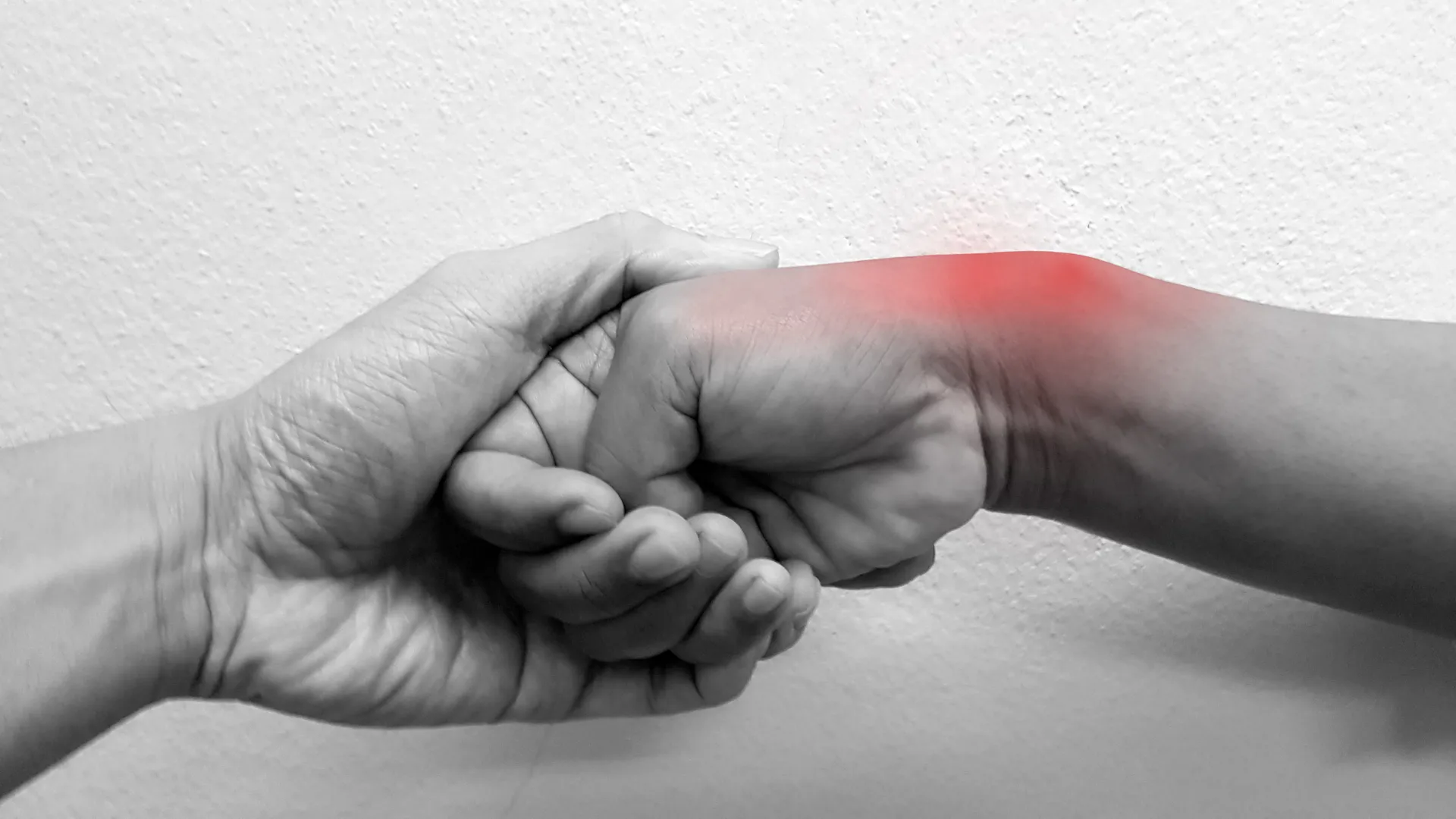
Pain is usually felt along the thumb side of the wrist and may extend into the forearm or base of the thumb. Symptoms are often aggravated by gripping, pinching, lifting or twisting actions.
Many people notice weakness when holding objects or discomfort when lifting with the thumb extended away from the hand. Swelling or local tenderness near the wrist is common, and movements involving combined thumb and wrist motion may reproduce sharp pain.
Symptoms may fluctuate depending on hand demand, often worsening after repetitive activity rather than during complete rest.
Is It Really De Quervain’s Syndrome?
Pain around the thumb and wrist can arise from several different conditions, including thumb CMC joint osteoarthritis, intersection syndrome or nerve irritation.
Specialist assessment focuses on reproducing symptoms through specific tendon loading tests while assessing thumb mechanics, grip behaviour and contributing movement patterns.
Accurate diagnosis is important because treatment strategies differ significantly between tendon irritation and joint-related conditions.
How To Test For De Quervain's:
Finkelstein’s test is a simple way to check for De Quervain’s tenosynovitis, a condition affecting the tendons in the thumb and wrist.
How to do it:
1. Hold your affected hand out with your palm facing inwards.
2. Make a fist by tucking your thumb inside your fingers.
3. Slowly bend your wrist down towards your little finger.
What to look for:
If this movement causes sharp pain along the thumb side of your wrist, it may indicate De Quervain’s tenosynovitis.
A specialist physiotherapist can perform this test accurately and guide you on the best treatment options
Imaging: When Is It Necessary?
Diagnosis is usually clinical and does not routinely require imaging.
Ultrasound may occasionally be useful where symptoms are persistent or where confirmation of tendon sheath thickening is required. MRI is rarely necessary unless symptoms are atypical or alternative pathology is suspected.
Imaging findings are always interpreted within the clinical picture, as structural changes do not always correlate with symptom severity.
Understanding Flare-Ups
De Quervain’s syndrome often fluctuates depending on hand use.
Flares typically occur following repetitive gripping, lifting or sustained thumb positioning. During these periods the tendon sheath becomes more sensitive, and movements that are normally manageable may provoke discomfort.
A flare represents temporary tendon irritation rather than worsening structural damage. Complete immobilisation can sometimes prolong recovery by reducing tendon adaptability.
Management focuses on temporarily reducing aggravating load while maintaining controlled movement and gradually restoring function as symptoms settle.
Injections For De Quervain’s
Corticosteroid injection can be a helpful option when De Quervain’s remains painful despite appropriate conservative treatment.
For some people, reducing irritation within the tendon sheath can make thumb and wrist movement more comfortable and provide a useful opportunity to return to normal hand use.
Injection therapy is often most helpful when combined with rehabilitation, activity modification and advice around tendon loading, so that symptoms can settle and the wrist becomes more resilient over time.
Considering an Injection?
Read more about corticosteroid injection therapy for De Quervain’s, including when it may help and what to expect.
How We Help Manage De Quervain’s Syndrome
At Solent Specialist Physiotherapy, management begins with precise diagnosis and understanding of the loading demands placed on the thumb and wrist.
Treatment focuses on settling tendon irritation while restoring normal movement and strength. Early stages may involve temporary activity modification and strategies to reduce excessive tendon friction. As symptoms improve, rehabilitation progresses toward strengthening the thumb stabilisers and improving grip mechanics.
Attention is also given to lifting technique, occupational demands and everyday hand positions that may perpetuate irritation.
Where symptoms are not progressing as expected, imaging referral or discussion regarding injection therapy may form part of a broader management plan.
Our aim is not simply short-term pain relief, but restoration of confident and durable hand function.
Understanding Tendinopathy
De Quervain's is one of several tendon conditions we treat. If you would like to understand more about how tendon pain develops and why structured load-based rehabilitation is central to recovery, you can read our overview on specialist physiotherapy for tendinopathy.
Frequently Asked Questions About De Quervain’s Syndrome
Is De Quervain’s the same as thumb arthritis?
Why did my symptoms start suddenly?
Should I completely rest my wrist?
Do I need a splint?
How long does recovery usually take?
Can De Quervain’s return?
Book a Specialist Wrist Assessment
If you are experiencing persistent wrist pain, appointments are available at our Fareham Upper Limb Specialist clinic with Mike Gillingham
Contact us to book Your wrist specialist assessment
