
Elbow Osteoarthritis
Specialist Physiotherapy for Elbow Joint Arthritis in Fareham
Contact us to book a specialist appointmentElbow osteoarthritis is less common than hip or knee osteoarthritis, but when it develops it can affect comfort, movement and everyday use of the arm.
People often notice stiffness when fully bending or straightening the elbow, discomfort with lifting, carrying, pushing or pulling, or difficulty with gym work, manual tasks and repetitive upper-limb activity.
Some people also experience catching, clicking or a sense that the joint does not move as smoothly as it once did.
Elbow osteoarthritis may develop following a previous injury or fracture, or after many years of repetitive or heavy use of the arm.
Although it is often described simply as “wear and tear”, the experience is more individual than that. Joint changes, muscle strength, activity levels and periods of increased joint sensitivity can all influence symptoms.
There are several ways to manage elbow osteoarthritis and help maintain comfortable, useful movement.
What Actually Happens in Elbow Osteoarthritis?
The elbow is formed by the humerus in the upper arm and the radius and ulna in the forearm.
These joints normally move smoothly together to allow bending, straightening and rotation of the forearm.
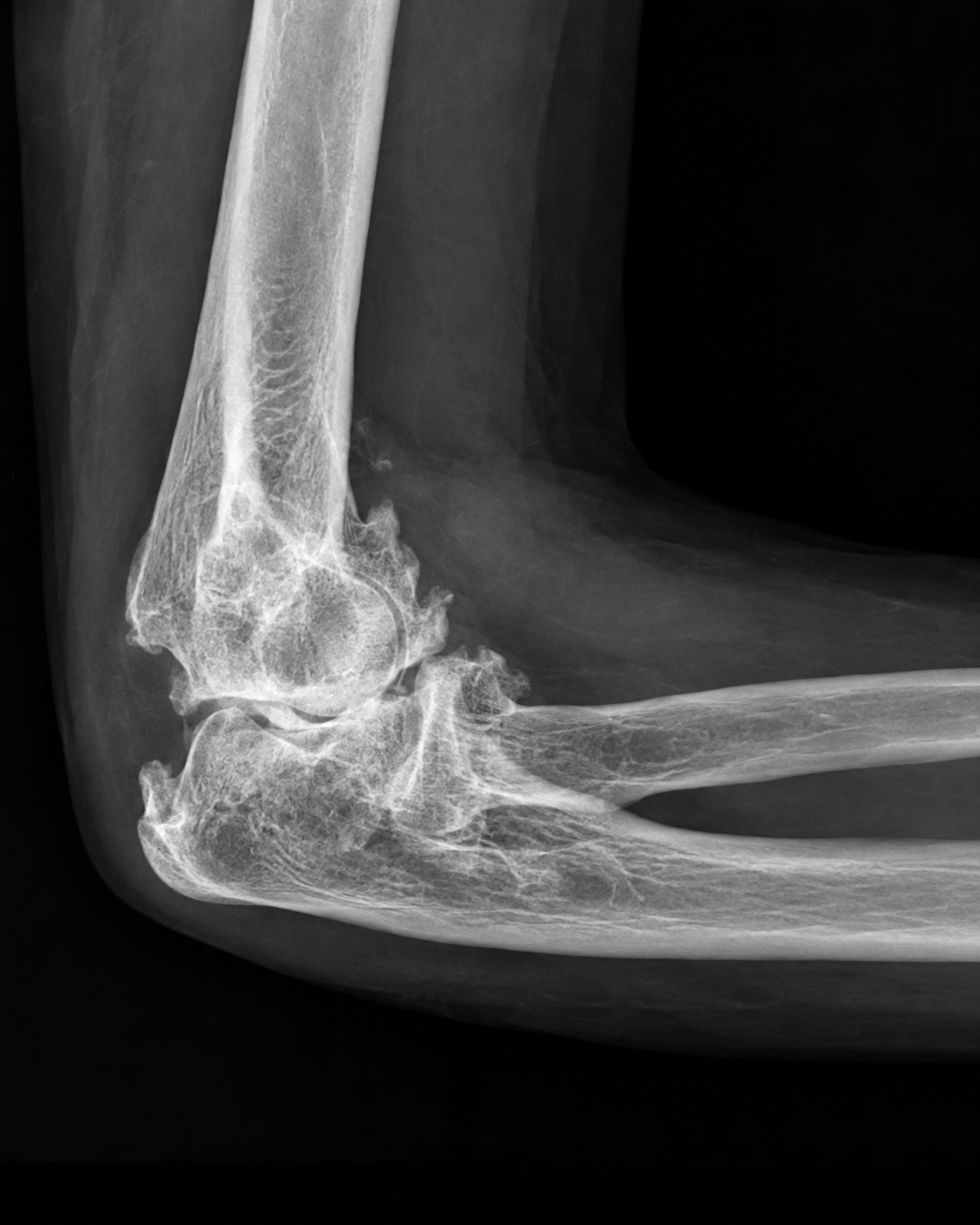
With osteoarthritis, the joint surfaces gradually change. This can include narrowing of the joint space, changes in joint contour and the development of osteophytes.
Over time, these changes can contribute to stiffness and reduced movement.
However, the amount of change seen on an X-ray does not always reflect how painful or restricted the elbow feels. Some people with clear joint changes remain very active, while others experience more difficulty with relatively modest imaging findings.
For this reason, treatment is guided by your symptoms, movement, function and goals, alongside imaging where useful.
How Elbow Osteoarthritis Commonly Presents
Pain is often felt around the elbow joint itself and may be accompanied by stiffness or a feeling that the elbow no longer bends or straightens as freely as it once did.
Some people notice discomfort with lifting, carrying, pushing or weight-bearing through the arm. Others find that gym work, repetitive upper-limb activity or everyday tasks become more difficult because the elbow feels painful, stiff or less mobile.
There may also be catching, clicking or a sense that the joint does not move as smoothly as it used to.
Symptoms can fluctuate, with periods when the elbow feels relatively settled and others when it becomes more painful or irritable.
A flare usually reflects a temporary increase in joint sensitivity rather than a sudden worsening of the osteoarthritis.
Movement and Exercise
A common concern is whether continuing to use the elbow will make the osteoarthritis worse.
For most people, appropriately graded movement and strengthening are helpful rather than harmful.
Maintaining movement and strength around the elbow, shoulder and forearm can help support everyday function and improve tolerance for lifting, carrying, work and exercise.
Rehabilitation may include mobility work, strengthening of the muscles around the elbow and upper limb, and gradually rebuilding tolerance for the activities that matter to you.
The aim is to help you move more comfortably, stay active and preserve as much useful function as possible.
Flare Management
Elbow osteoarthritis can sometimes become more symptomatic after increased activity, heavier lifting, repetitive use or a change in exercise.
During a flare, temporarily reducing the activities that are most provocative can help while still maintaining comfortable movement.
As symptoms settle, normal activity and strengthening can gradually be reintroduced.
Understanding how to respond to a flare can make the condition feel much more manageable and help avoid unnecessary periods of complete rest.
Imaging: When Is It Helpful?
A clinical assessment can often give a good indication of whether symptoms are coming from the elbow joint.
An X-ray may be useful to confirm osteoarthritis and can show changes such as joint-space narrowing, osteophytes or alterations in joint shape.
If you already have imaging, your specialist can review this alongside your symptoms and examination findings.
Further imaging can also be arranged where it would help clarify the diagnosis or guide treatment or onward referral.
Injection Therapy for Elbow Osteoarthritis
For some people, injection therapy can be a useful part of managing elbow osteoarthritis, particularly when pain is affecting everyday activity, work, exercise or progress with rehabilitation.
At Solent Specialist Physiotherapy, we offer corticosteroid and hyaluronic acid injection options for selected elbow osteoarthritis presentations.
Corticosteroid can help settle a painful or irritated joint.
Hyaluronic acid provides a non-steroid injection option for selected people with elbow osteoarthritis.
The most appropriate option depends on your symptoms, how the elbow is affecting you, previous treatment, imaging where relevant and what you would like to get back to.
Injection therapy is usually considered alongside rehabilitation, with the aim of helping you move more comfortably and make progress with strength and function.
When Might Surgery Be Considered?
Many people manage elbow osteoarthritis without surgery.
An orthopaedic opinion may be helpful where pain, stiffness or loss of function remain significantly limiting despite appropriate non-surgical treatment.
The type of surgery considered depends on the pattern and severity of the joint changes, the amount of movement available and how much symptoms are affecting everyday life.
If symptoms reach the point where surgery may be worth considering, your specialist can help you understand the options and arrange an appropriate onward referral.
Our Specialist Approach to Elbow Osteoarthritis
Assessment focuses on how the elbow is moving, where symptoms are arising from, how the upper limb is functioning and what activities are difficult for you.
Treatment is then built around your individual presentation and may include mobility work, progressive strengthening, advice around activity and flare management, injection therapy where appropriate and onward referral where needed.
The aim is to help you understand the problem, feel more confident using the arm and maintain as much comfortable function as possible.
Understanding Osteoarthritis
Elbow osteoarthritis is one part of our wider specialist osteoarthritis service. For a broader understanding of how osteoarthritis develops and how structured rehabilitation supports long-term joint health, you can explore our main osteoarthritis overview page.
Learn More About OsteoarthritisBook a Specialist Elbow Assessment
If elbow osteoarthritis is affecting your movement, work, exercise or everyday activities, a specialist assessment can help clarify what is driving your symptoms and which treatment options may be most useful.
Appointments for elbow osteoarthritis are available within our Fareham Upper Limb Clinic with Mike Gillingham, Upper Limb Specialist Physiotherapist.
Contact us to book our specialist elbow assessment
