
Cingal Injections
Specialist assessment and Cingal injection for knee osteoarthritis in Gosport and Emsworth.
What Is Cingal?
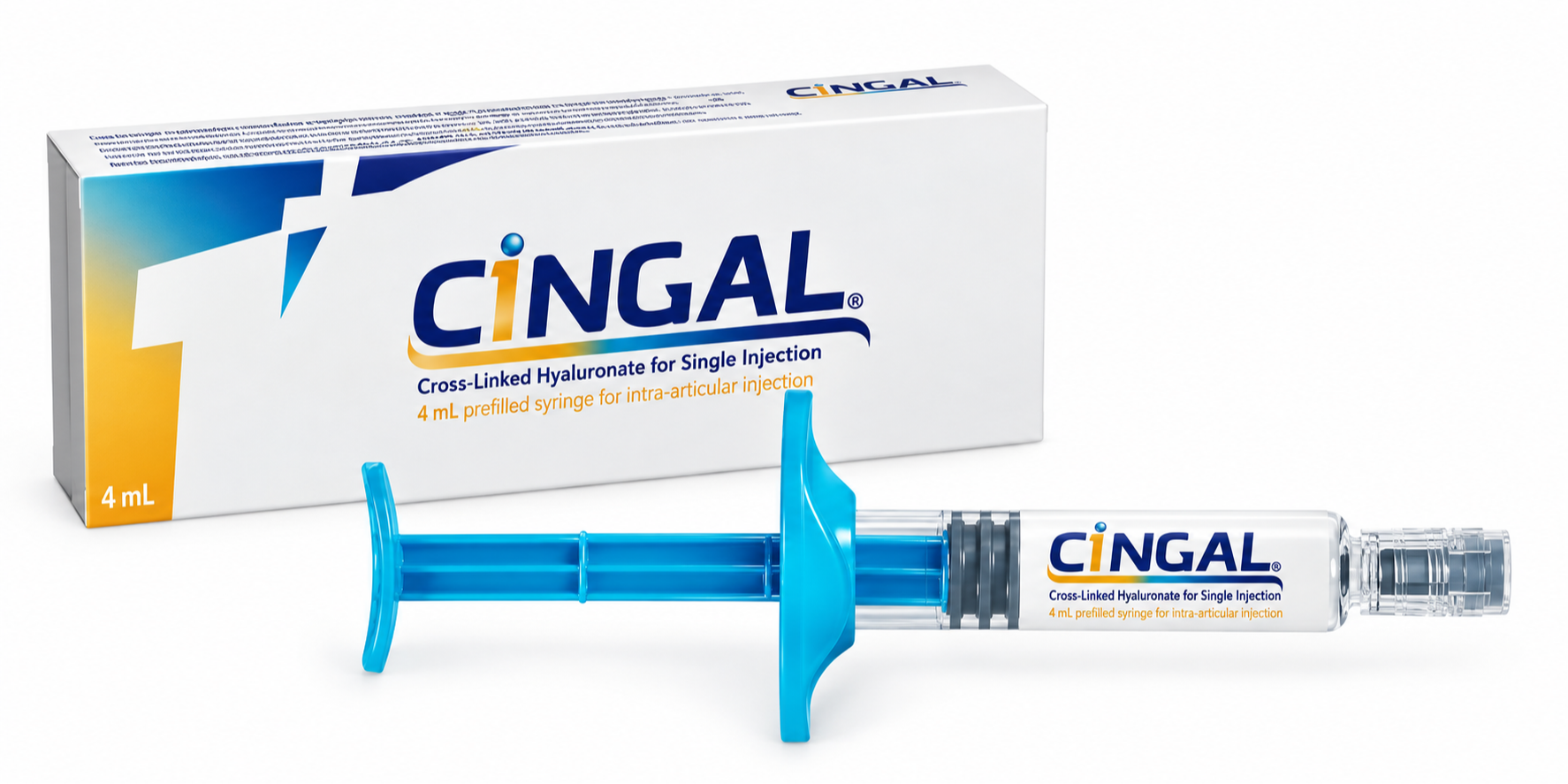
Cingal is a single injection used for knee osteoarthritis. It combines hyaluronic acid with the corticosteroid triamcinolone hexacetonide.
The corticosteroid component is designed to provide earlier relief from pain and inflammation, while the hyaluronic acid component supports lubrication and movement within the joint.
For some people, this combination can make walking, exercise and everyday activity more comfortable and create a useful opportunity to progress rehabilitation.
When Can Cingal Be Helpful?
Cingal can be helpful when knee osteoarthritis is causing pain, stiffness or swelling that is affecting walking, exercise, work or everyday activity.
It may also be useful when symptoms are making rehabilitation difficult, or when both an anti-inflammatory effect and hyaluronic-acid treatment are being considered.
Your specialist will take account of your symptoms, examination findings, medical history, previous treatment and what you would like to get back to before discussing whether Cingal is a suitable option for you.
How Is Cingal Different From Other Injections?
Corticosteroid injections contain an anti-inflammatory medicine, while Durolane and Ostenil Plus are hyaluronic-acid injections.
Cingal combines both within a single injection. The corticosteroid component is intended to provide an earlier anti-inflammatory effect, while the hyaluronic acid is designed to support lubrication and movement within the joint.
Each option has a slightly different role. Your specialist will consider your symptoms, medical history, previous treatment and what you would like to achieve before helping you decide which option is most appropriate for you.
Your Cingal Assessment
Every Cingal enquiry is reviewed by a physiotherapist with specialist expertise in knee osteoarthritis.
Before your appointment, we will contact you by telephone or video to discuss your symptoms, medical history, medication, previous treatment and any imaging you have already had. This also gives you an opportunity to ask questions before deciding whether you would like to proceed.
An in-person clinical assessment is then completed before treatment. If Cingal is a suitable option, the injection can usually be given at the same appointment following discussion and consent.
If another injection, further investigation or a different treatment approach is likely to be more helpful, your specialist will explain the options and advise on the next step.
Do I Need Imaging Before a Cingal Injection?
Not everyone needs new imaging before treatment.
If you already have X-rays or scans, your specialist can review these alongside your symptoms and clinical examination. Further imaging may be recommended when it would help clarify the diagnosis, assess the joint or influence treatment decisions.
Our clinicians provide clinically (landmarked) guided injections. If ultrasound guidance would be preferable for your particular presentation, we will advise you on the appropriate next step.
When Extra Care May Be Needed
Certain medical circumstances may mean that Cingal needs to be postponed or considered in more detail before treatment.
These include infection within the knee, active infection or broken skin around the injection site, or a known allergy to hyaluronic acid, triamcinolone or another component of the injection.
We will also take particular care if you have diabetes, take anticoagulant medication, have a bleeding disorder, are pregnant or breastfeeding, or have recently received another corticosteroid injection.
Please also tell us about any planned surgery or knee replacement, as the timing of a corticosteroid-containing injection may be relevant.
These circumstances do not always prevent treatment, but they are important for your specialist to know about before an appointment is arranged.
What Might I Notice After a Cingal Injection?
Most people do not experience a serious complication, but all injections carry some potential risks. These will be discussed with you before treatment.
Temporary pain, stiffness, warmth or swelling can occur after a Cingal injection, and symptoms can occasionally feel more irritated for a short period before settling.
Bruising or bleeding around the injection site can also occur. The corticosteroid component may cause facial flushing, temporary sleep or mood disturbance, menstrual disturbance or a short-term rise in blood glucose.
Less common complications include skin discolouration, thinning of the skin or fatty tissue around the injection site, a more pronounced inflammatory reaction within the knee, infection, allergic reaction, nerve injury or damage to surrounding structures.
Your specialist will discuss the risks relevant to you and explain what to expect following treatment, including any symptoms that would require medical advice.
What Happens After the Injection?
You will receive individual aftercare advice based on your symptoms, usual activities and rehabilitation goals.
A short period of relative rest is generally recommended before walking, exercise and rehabilitation are gradually resumed.
Because Cingal contains both corticosteroid and hyaluronic acid, some people notice an earlier change in symptoms followed by further improvement over the following weeks. The response varies from person to person.
Some people experience a substantial improvement, while for others the change is more modest. The duration of benefit also varies.
Where pain has been limiting your walking, strength, confidence or ability to exercise, any improvement can provide a useful opportunity to progress rehabilitation and return to the activities that matter to you.
Cingal Injection Price
£350 – one joint
Where We Offer Cingal Injections
Cingal knee injections are available at our specialist knee injection clinics in Gosport and Emsworth.
In Gosport, treatment is provided by Victoria Smith, Hip & Knee Specialist Physiotherapist.
In Emsworth, treatment is provided by Mike Saegert, Spine, Hip & Knee Specialist Physiotherapist.
Frequently Asked Questions About Cingal Injections
Does Cingal contain corticosteroid?
Is Cingal a single injection?
Is Cingal only used for knee osteoarthritis?
How long can the effect last?
What is the difference between Cingal and Durolane or Ostenil Plus?
How quickly might I notice an improvement?
Want to Compare Your Injection Options?
Not sure whether Cingal is the right option for you? You can explore the other injection treatments we offer.
Would You Like to Discuss Cingal?
Tell us how your knee symptoms are affecting you and what you would like help with.
Your enquiry will be reviewed by a knee specialist who can talk through whether Cingal could be a helpful option and advise you on the most appropriate next step.